Tag Archives: A Vanished Past

A Vanished Past – Time of Change (1 of 3)

A Vanished Past – Vol.1 –  A Time of Change (1 of 3)

 The 1920s and 1930s Robert Pearson wrote elegantly about his childhood for his children:

‘My boyhood years, in the 1920s and 1930s, were not all that far removed from the late 19th century, extraordinary as that seems now that we are in the 21st century, and village life then reflected this in many ways. The importance of the church and the Vicar in village life; the squire (country gentleman and major landowner); people of independent means; local tradespeople, and what could be classified loosely as ‘working people’. It was a society set in aspic – how things had been for hundreds of years, little affected by the Industrial Revolution of the late 18th and early 19th centuries when centres of manufacture had, with mechanisation, been transformed. In the towns so affected, the links with the past had been largely severed, so there was this dichotomy between these places and rural areas which has taken many decades to develop some kind of equilibrium. But not for much longer would rural areas remain unaffected. Generally speaking, rural areas nowadays, except the most remote, enjoy most of the facilities available to town and city dwellers – and certainly essential ones.’

A Time of Change By Honor Berry and Clare Marchant

When we were young the oldest people in our village could remember back as far as the 1880s. They recalled how they had coped with the difficulties of wars (always fought far away), varying weather conditions, and epidemics. During their childhoods change had come to the village slowly. The old men and women had seen the drift of people away from the village into the towns with the improvements in the efficiency of farm implements. They had witnessed a revolution in transport and felt the influences of a number of new inventions, but even if their generation had all received compulsory schooling, which their forebears had not, the way of life of many people, although improving, was not so very different from a hundred years before.

Traditionally the working-men of Horley laboured on the farms. Some were in domestic service along with the women. All were beholden to the handful of middle-class families in the village, the landowners who employed them, and they worked long arduous hours in poor conditions for low wages.
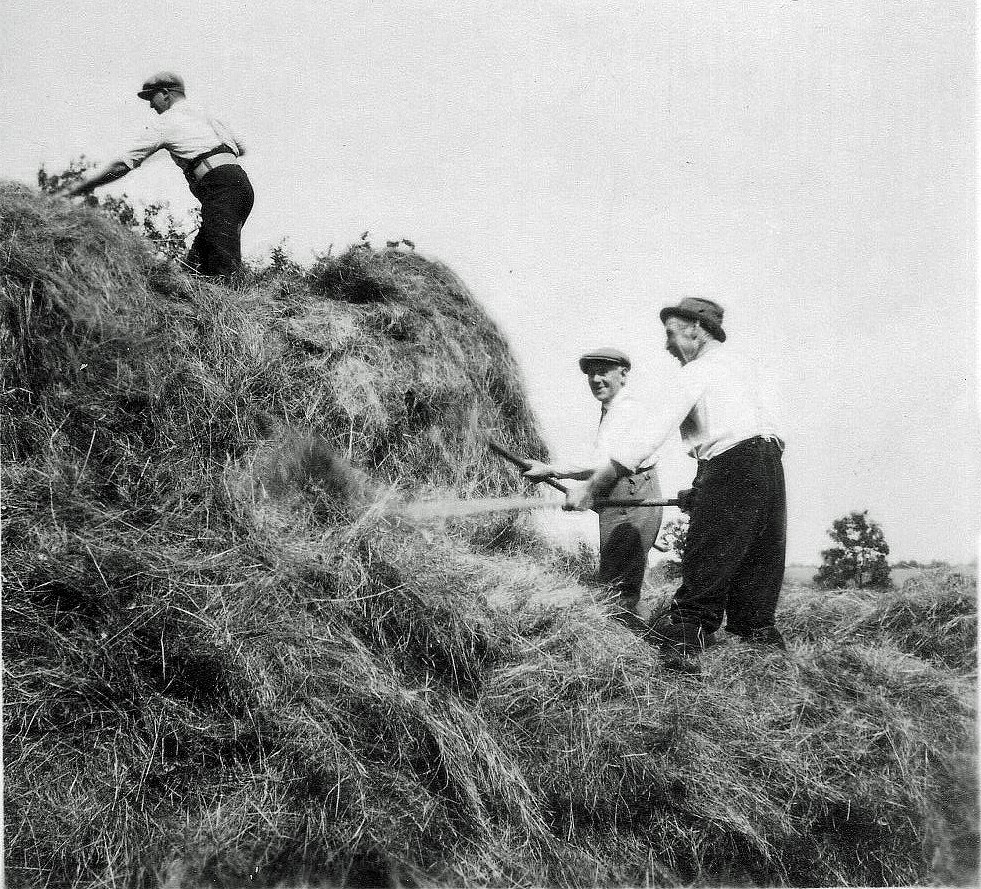
Bagnall and EnglandAfter a life-time working on the land in all weathers, the men looked old once they had reached their sixties. The leather gaiters that they wore marked them out as belonging to a different age from ours. The women fared rather worse. If they had not adopted the modern ways with ‘perms’ and hair-colouring, their hair became grey and wispy and was normally twisted back into a bun. But the most telling sign of age was the loss of teeth: older people were toothless though they had an immaculate set of false teeth recognisable by their whiteness and regularity, which were often so uncomfortable they were only worn on special occasions. Restricted diets in the past had not made strong bones and elderly people in our village suffered a good deal of lumbago, arthritis, rheumatism and chest complaints. Nonetheless they had learned to be hardy and lived stoically with illness and disease.

To us as children in the 1940s the village and its people seemed as though it had been like that forever. Changes seemed very few and very slow, but we did not understand that we were a generation with different expectations and we did expect things would get better after the war. However, we could never have envisaged in our wildest dreams quite how far our lives would change and how comfortable we would become.

horley-the-village-c1955_h234002_large copy right @the francis frith collectionBy 1950 Horley along with all the other villages in the country was beginning to feel the influence of social and economic change and development that would finally see the end of the working village. The change while it brought undoubted benefits that made everyday living more comfortable, was quicker than any previously experienced. The elderly remarked on it constantly and told us that the alteration was so complete that nothing remained the same. We found this hard to understand. The village looked to us as if it had not changed for decades. There were no new buildings other than the six Old Council Houses that had been built between the wars, and the four Manor Cottages that replaced the thatched cottages destroyed by fire. Most houses still had no electricity, no running water and no sewerage system. But it was not that which they were talking about. The loss they felt was of the village society, for they had witnessed the almost total disintegration of a thriving agricultural community, and had we understood the significance of the evidence available to us, we could have seen that there was plenty to support their claims.
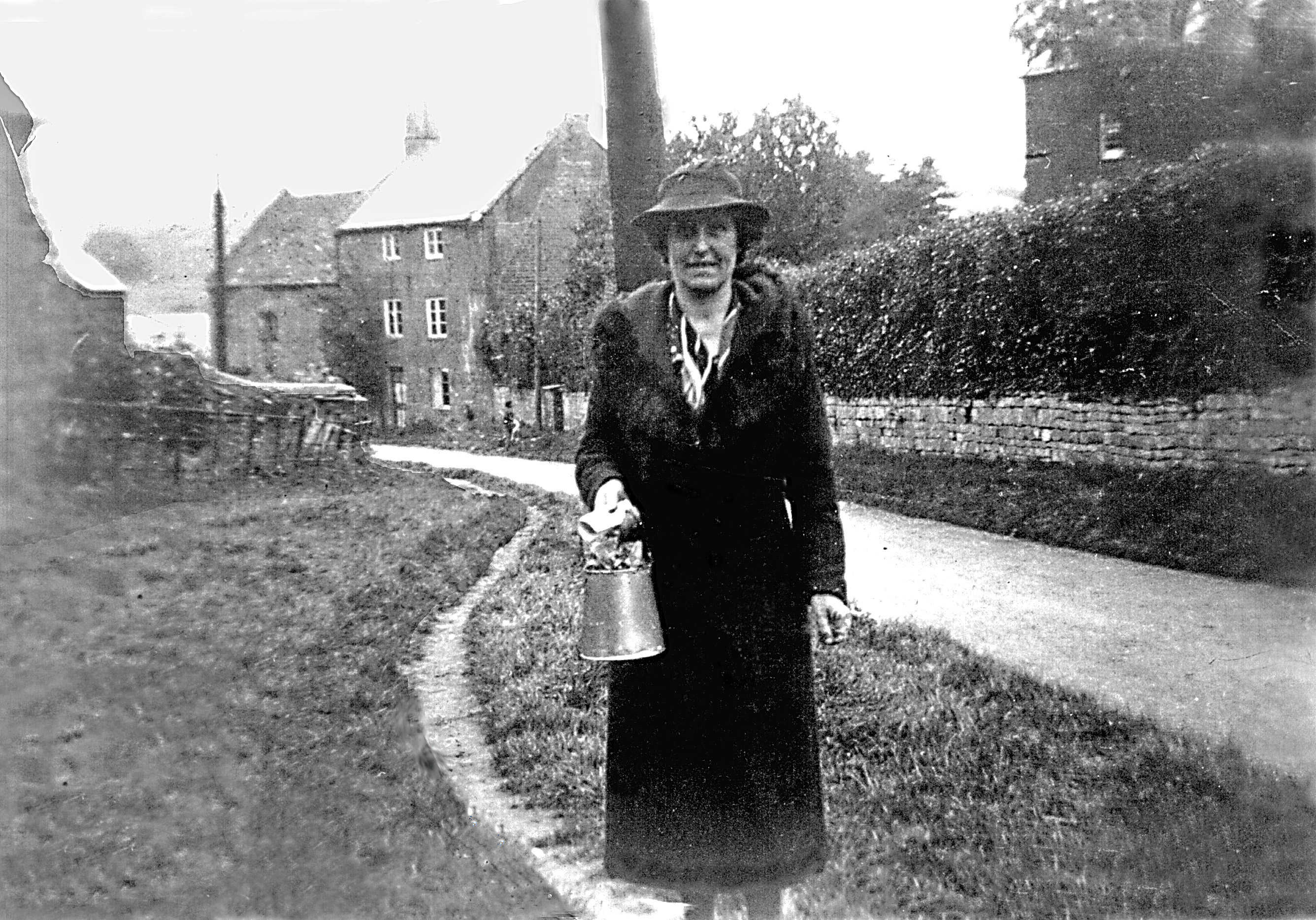
The Old Mill & Mrs Highham use collection of Maureen Banks

Mrs Higham of 5 The Old Council Houses fetching milk with The Mill (in the background)

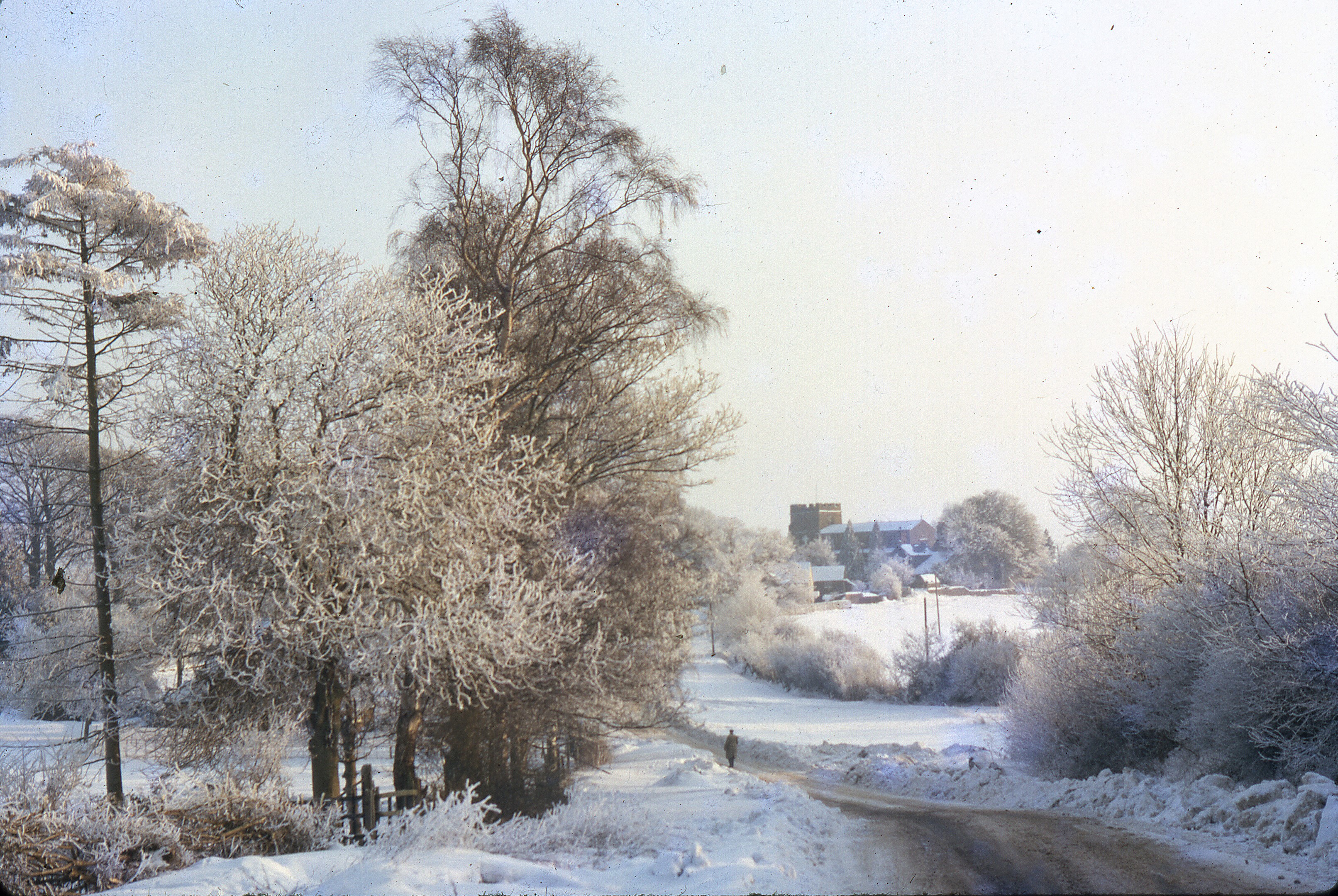
The main period of this book, 1940-65, was the end of an era.The Second World War delayed progress for a while. In the 1940s our milk still came warm from the cows, unpasteurised, in a churn or bucket and at the door was ladled out into the jugs or cans housewives provided. Horses were still used in the fields. At harvest time men came home from work in Banbury or on the Ironstone, had their dinner/tea and then went to help harvesting until, even with double summer-time[1], the dusk settled over the countryside. I remember waking up as the harvesters went past The Vicarage singing. Older women still went gleaning at harvest time, families went sticking (gathering firewood), and men went ferreting to catch rabbits for family consumption.

Decay seemed to lie all around us. There was not much building in the years after the war for there were not the materials or the money – indeed building was forbidden without a licence. After the prisoners of war had left Horley House, and the sad, Displaced Persons found a job, Horley House which had once been the main house in the village, lay unoccupied and increasingly dilapidated, the drive closed in by overgrown laurels. Bought at a knock-down price (no-one could afford the cost of keeping large houses), the lead tanks in the attics were removed by the Banbury building company that had bought it and sold for scrap.
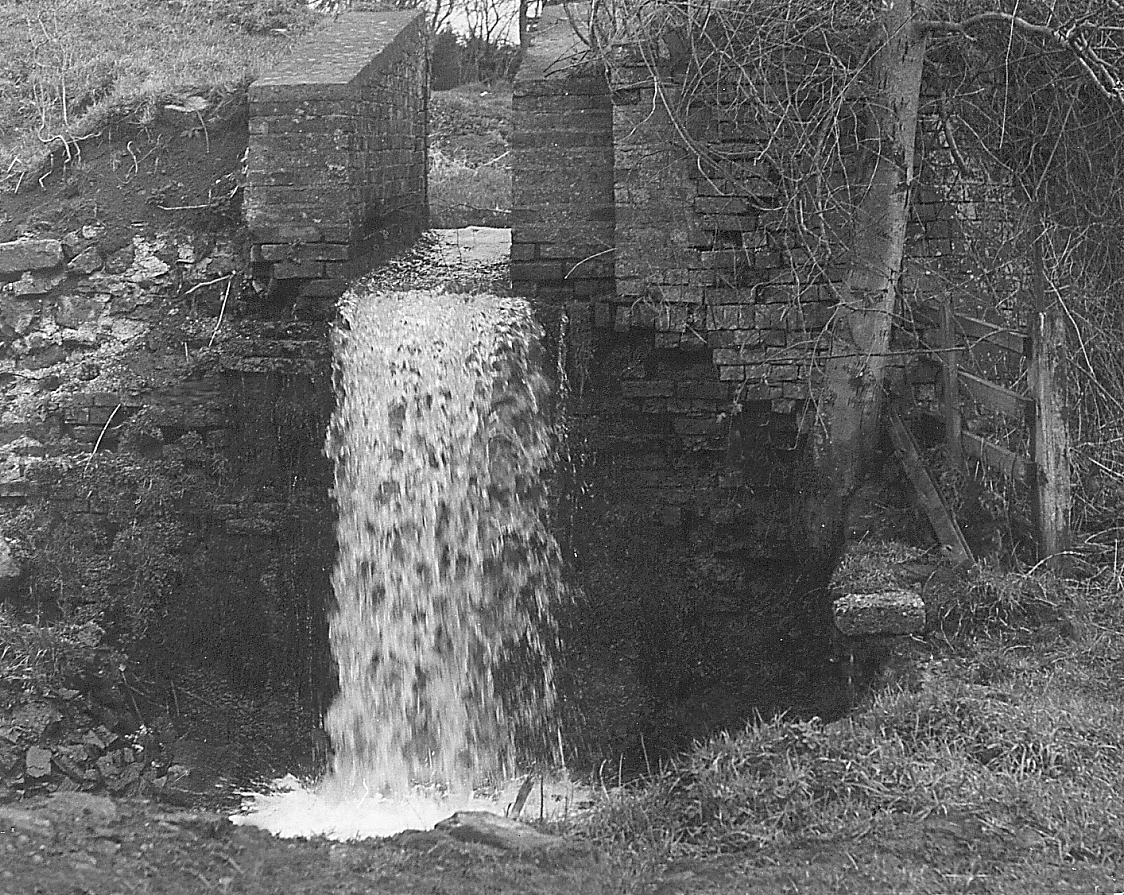
Horley Mill Race John Saunders courtesy Patching TrusteesIt was during the immediate post-war period that the unused mill was reduced to one storey and the stone used for a house in Alkerton. A crowd gathered one sunny afternoon to see the upper storeys being taken down. At this time Horley was very poor. It was a period when some people were forced to mend holes in windows with sacking stuffed with straw; when thatch was patched and paint peeled from windows and front doors, and paint, if available, was black, dark green or brown, giving the village a severe and sombre aspect.

The nearby Oxfordshire Ironstone Company offered welcome alternatives to farm labouring and thrived during the Second World War and 1950s, then declined and suddenly closed in the late 60s. As a consequence more men had to look outside the village to seek work in Banbury or become self-employed.

Socially it was a different time with different values and ways of doing things. Although there were fewer and fewer people working on the land, the vast majority of people came from agricultural families either in Horley or in other villages. So we saw ourselves as an agricultural village. Culturally we inherited all sorts of assumed rights. There was an unspoken and unchallenged belief that farmers managed the land, but the countryside belonged to everyone. For our part we shut gates, walked around the edge of fields with hay or other crops, and did not allow dogs to chase cattle or sheep. I never appreciated the great freedom I had wandering over the fields, playing in the ponds and spinneys. It was my world. No mobile telephones for my parents to keep tabs on me. I never considered it would ever be otherwise.

Living in a small community could be intense and feelings could run high leading to hurt pride and angry disagreements that were never resolved. But there were also deep friendships which stood the test of time.

The village was also divided by those who went to Chapel or to Church – some people went to both at different times, and some went to neither.

Coming up in part 2 and 3:

  • Changes in Health provision
  • Entertaining
  • Walks
  •  The decline of the village
  • The Impact of the two World Wars
  •  The Evacuees and other Strangers
  • Agricultural mechanisation
  • Thatched roofs
  • The Arrival of Electricity, Water and The Main Drain
  • A Better Britain – Regenerating Horley
  • Secondary Education
  • Abandoned Untidiness to Village pride
  • Vestiges of a Feudal Society
  • The New Council Houses

Clare Marchant, June 2015
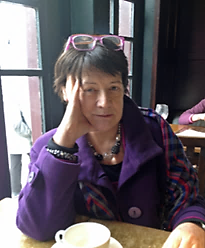
Clare MarchantThe is an extract from A Vanished Past Volume 1, each Volume is £15 +P&P  or you can buy both for £33 incl. p&p.

They are available directly from Clare , Shaftesbury House, 15 Circus Street, Greenwich, London SE10 8SN or marchantclare@hotmail or call on 020 8858 8529. Cheques payable to Clare Marchant.

Clare Marchant was born in Horley Vicarage, Oxfordshire in 1941 and spent her formative years there until 1965. She now lives in Greenwich, London

First published in 2015. All rights reserved. The rights of Clare Marchant to be identified as author of this work has been asserted in accordance with the Copyright, Design and Patents Act 1988. No part of this publication may be reproduced without the consent of © Clare Marchant.  Copyright for each image rests with the contributor.

[1] Clocks were two hours ahead of Greenwich Mean Time, so darkness fell after 10pm


A Vanished Past – The Cowman

Mr and Mrs Gardner

Red LionNext door to The Red Lion pub was a tall thin building which was strangely out of place amongst the lower thatched houses of the village. It looked as though it had been squeezed onto a small patch of land.

However this is where the friendly elderly Mr and Mrs Gardner lived in the 1940s.

I remember Mr Gardner as cowman at Manor Farm. He milked all the cows by hand in the cowsheds at the side of The Vicarage kitchen garden, where he allowed us to watch him, at a distance. He sat on a small three-legged stool.

Like most men working with animals he wore leather gaiters, and like most countrymen who worked on the land he moved at a steady, even pace all day long.

The house was later pulled down.

Extract from A Vanished Past Volume 1 £15   Both Volumes and p&p £33. From Clare Marchant, Shaftesbury House, 15 Circus Street, Greenwich, London SE10 8SN or marchantclare@hotmail. Cheques payable to Clare Marchant.


A Vanished Past – The Oil Man

Mr Warren E Warren (1884-1971) and his wife Ida (died 1967)

Mr Warren


Photo by John Saunders,                            Courtesy Alice Bowmaker

It was widely reported that Mr Warren Ernest Warren had been born in Canada although he showed no signs of even the slightest Canadian accent. He and his wife first lived in The Nutshell next to Phlox Cottage, and then bought and refurbished the house where Mr and Mrs Hicks Senior had lived – Jasmine Cottage, which had cascades of jasmine falling down the front of the house.

John Saunders took this photograph (Mr Warren) to illustrate countryside deliveries. The Shop at your Door oilman delivered to the many households still using paraffin for lighting, cooking and heating. This is one of the few pictures of Mrs Ida Warren, who worked for several families in the village including the Pratts at Essex House and the Saunders next door at Phlox Cottage and then Horley School House.

They had two daughters Maudie and Margie (Margaret) who were born in Canada. Mrs Warren regaled us with the tale of how she had been driven to hospital on a sleigh through a winter snowstorm for the birth of one of her daughters. It sounded both romantic and jolly to us, but it could have been neither at the time. Both Maudie and Margie left the area in the late 1940s or early 1950s and rarely returned. Mr Warren was a commercial traveller in the late 1930s, but was also reckoned to have been a book-keeper/accountant at some time in the past. He died in 1971 in the Brackley area.

Warren E. Warren was actually born in Hammersmith, London, one of a family of eight children. He worked for a period in Winnipeg Canada in the first decade of the 20th century. It is possible he acquired Canadian citizenship and so it may have been true he was Canadian though not born there. They had hopes of becoming farmers, but either that failed or they tired of the idea.

Mr Warren was a pale, small and gaunt man and a prolific smoker. He lived to be 87. There is a good photograph of him in the chapter on the cricket club in a later volume.

Extract from A Vanished Past Volume 2 £15   Both Volumes and p&p £33. From Clare Marchant, Shaftesbury House, 15 Circus Street, Greenwich, London SE10 8SN or marchantclare@hotmail. Cheques payable to Clare Marchant.

A Vanished Past – Grocers

“History rarely repeats itself, but it often rhymes. …” Mark Twain.

Interesting to compare and contrast our “grocery shopping” experience now with then:

  • Home Deliveries:  First the shopkeeper had to visit all his customers to take down their orders (hardly anyone had a telephone in those days); then make his way to the town, buy whatever commodities were ordered, and then come back and make the individual deliveries. For all of this he made a modest charge. But to even think of him keeping all those orders separate in his head, in combination, of course, with some kind of record in the notebook he also carried, makes the mind boggle! All mental arithmetic; no pocket calculators.”
  • Village Shop: “At the same time the small grocery shops, whether in Banbury or the villages found themselves in competition with new large food outlets like Keymarket.”

Grocers

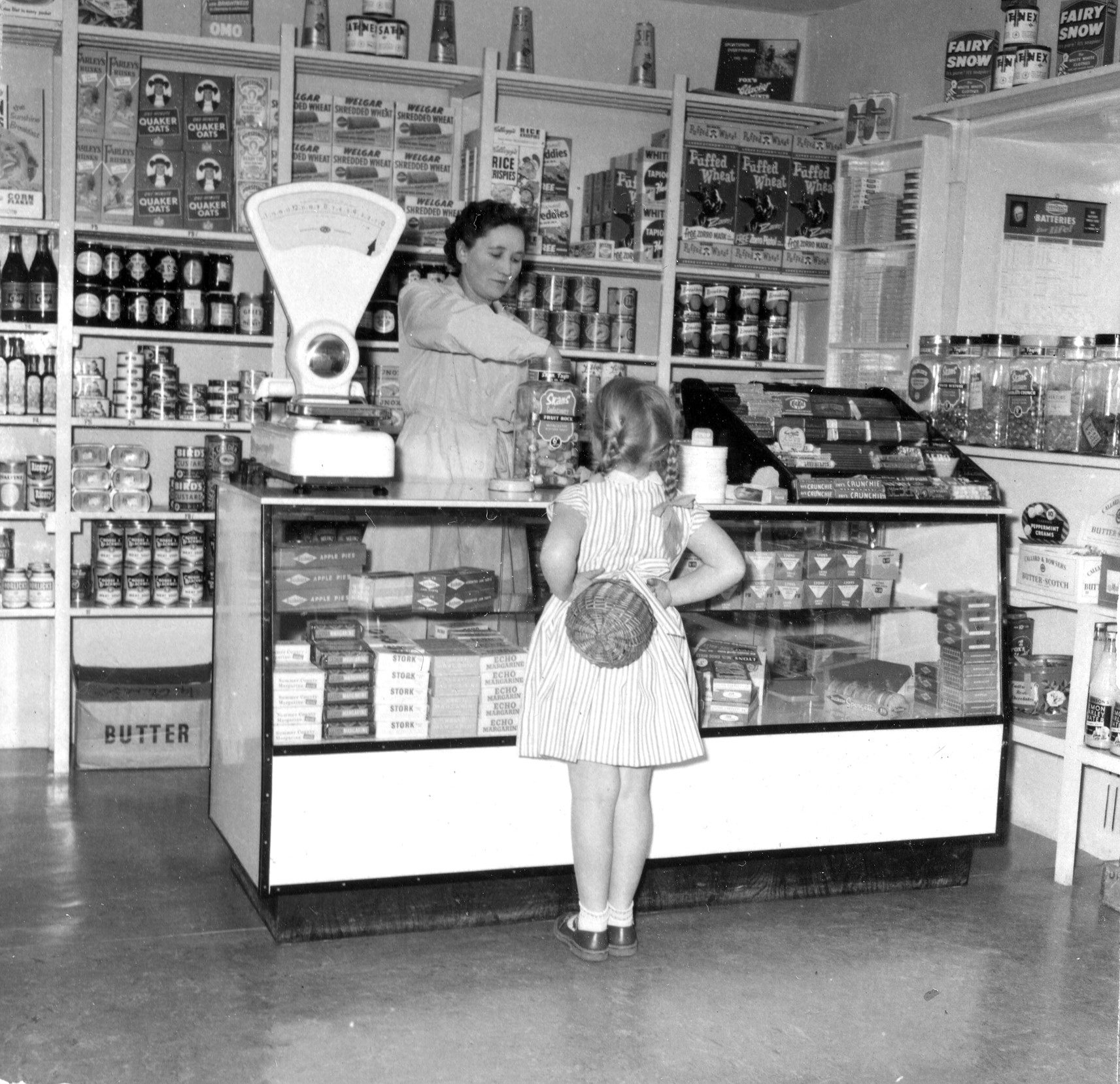
Alice Saunders and Maureen Eeles buy sweets from Mrs Oliver

Alice Saunders and Maureen Eeles buy sweets from Mrs Oliver, Photographs by John Saunders

During the war there was no village shop in Horley. Most people did best if they committed themselves to one grocer or another, and became a regular customer. Dossetts the Banbury’s ‘High Class’ grocers made pre-ordered deliveries to large households in the area.

Shortly after the war the elderly Mrs Roylance ran a little shop for a short while from her front room in Hillary Cottage. It was hard to keep going. Mrs Jack Oliver took it over when she left as cook of The Manor.


Mrs Jack Oliver serves Ann Saunders of The School House

Mrs Jack Oliver serves Ann Saunders of The School House

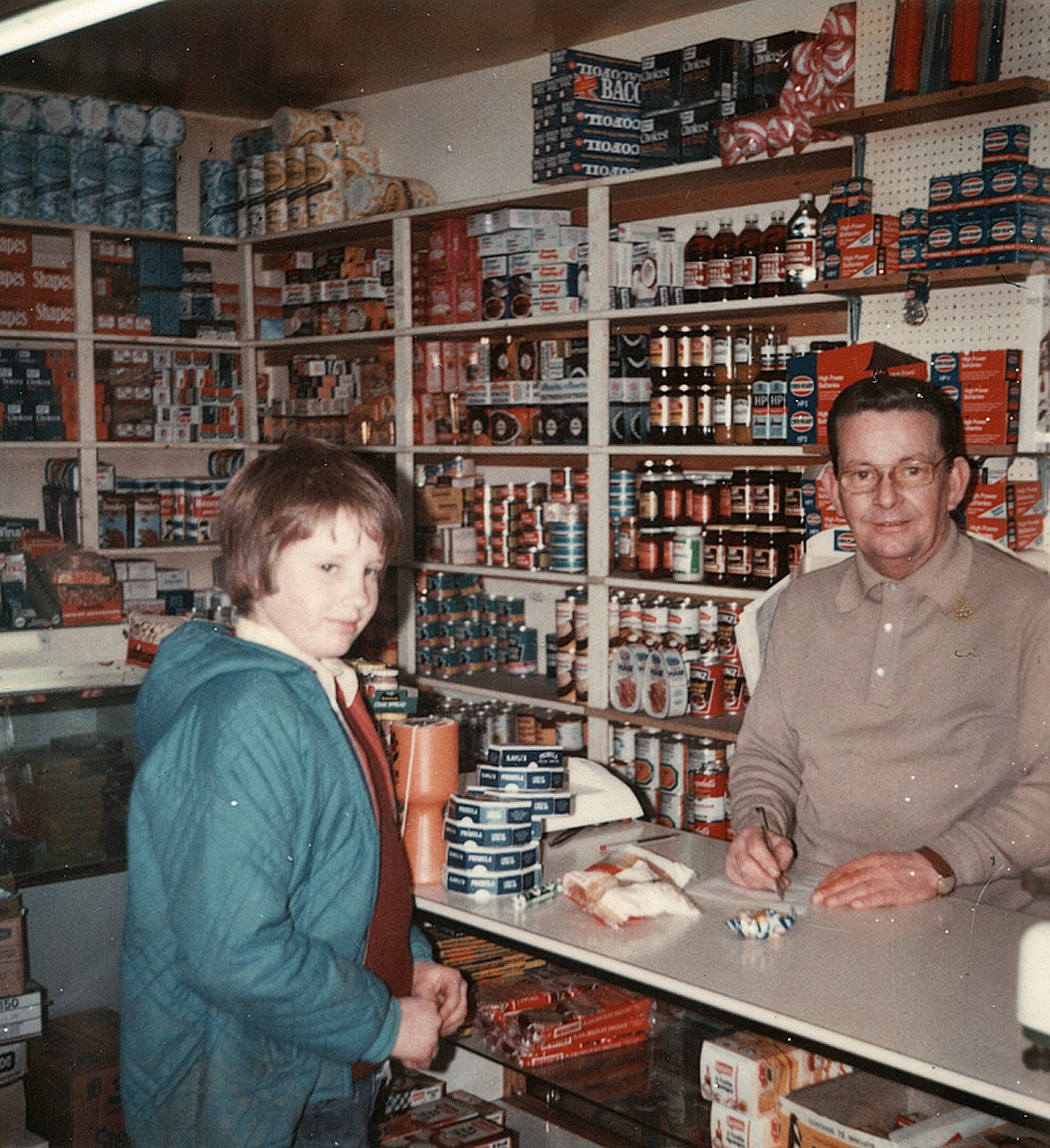
Mr Jack Oliver in the shop

Mr Jack Oliver serving in the shop and post office in The Square

In the 1950s the Gibsons of The Manor provided the village with a purpose-built Shop and Post Office in The Square which Mr and Mrs Jack Oliver ran and eventually owned, and which supplied all the basic non-perishable provisions that people needed. At the same time the small grocery shops, whether in Banbury or the villages found themselves in competition with new large food outlets like Keymarket.

Mr Jack Hobbs

The extended shop – below is a picture of Mr  Jack Hobbs of one of Varney’s Yard cottages, now Ivy Cottage, leaving the village shop. By 1965 the shop had closed and a Co-op van was delivering groceries on a Tuesday

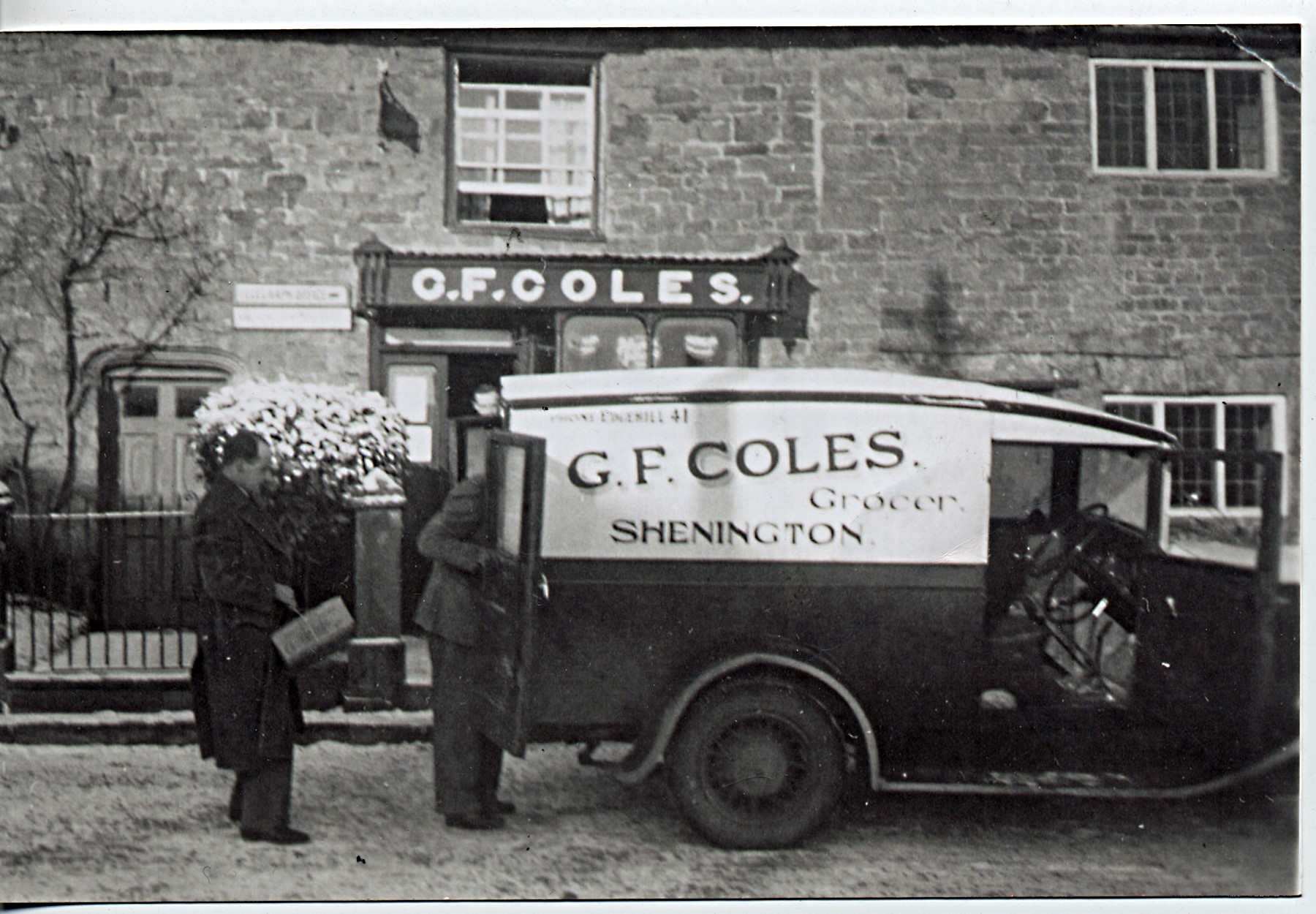
Courtesy of Mrs E M Blakiston-Houston (previously Coles) & Mrs Margaret Coles of SheningtonCarriers to and from Banbury were very important well into the 1930s, bringing food and goods to many households. As late as the 1950s the Sumner family still provided a residual service for those unable to get to Banbury. Robert Pearson writes in more detail about the 1920s and 1930s: ‘….. there were other sectors of country life where horses still provided an essential service. The village had its own motorised bus service into the local town twice a week (on market day, which was on Thursdays, and on Saturdays), but the carrier service was still operated by a covered horse-drawn wagon, which was fitted up with shelving…This service also operated on the same two days, and in retrospect must have been a nightmare to organise. First the shopkeeper had to visit all his customers to take down their orders (hardly anyone had a telephone in those days); then make his way to the town, buy whatever commodities were ordered, and then come back and make the individual deliveries. For all of this he made a modest charge. But to even think of him keeping all those orders separate in his head, in combination, of course, with some kind of record in the notebook he also carried, makes the mind boggle! All mental arithmetic; no pocket calculators.’

Mr Philip Coles, the grocer, was a constant figure in the village on Tuesdays. He, his brother Ernest and his sister, Mrs E.M. Blakiston-Houston owned the village grocers shop in Shenington, and took their van round several villages collecting orders from each house and then after searching through the shelves stacked with groceries and boxes full of goods on the floor of the van, returning with a wicker basket full of the food. During and in the years following the war the Coles’ business thrived, but suffered with the arrival of supermarkets and their lower prices.

PS Since posting this one of the photo’s has been shared 2.7k times, you should be able to it

How many people remember when the local grocery shop looked like this?

Posted by Dave Matthews on Monday, 14 December 2015

“>here

What’s Next From Inside A Vanished Past ….

Red LionHope you’re enjoying these glimpses into Horley’s past? Some aspects have really changed and yet there is something enduring about our village community that still prevails today.

I have worked with Clare Marchant to “look inside” her book and share an overview of the contents, contributors and the stories of life in Horley earlier in the last century.  Posts so far:

Water tap outside Chapel Cottage 1930s cWm Gunn 2013What’s next?

A view on the changes during this period, like grocery shopping, the decline and regeneration, and a “now and then” view, such as this picture of the water tap taken outside Chapel Cottage.

We will take a look at some of the work Horley such as a Cowman, a Oilman and a Farm Labourer.

There will be a story by Clare’s sister that she wrote for her children about her life growing up here, it includes a story of a couple who lived in Chapel Cottage, and our very own actor of West End and movie fame.

Remember these are just glimpses, that we thought might interest you but there is so much more. It would make a wonderful Christmas present ……….. now you can get your copy right here in Horley from Mike and Sue Patching or at Horley’s Christmas Market this Saturday 28th.

Here are the ways to buy your copies of Volume 1 & 2 : 

1. Currently sets are available to be picked up from Mike and Sue Patching at 2 Gullivers Close (cheques should be made payable to Clare Marchant for £30);  Remaining sets will be on sale at the Christmas Market 5-7pm 28th November
2. Sets are available from Clare Marchant direct (£33 inc p&p.delivery to UK addresses – particularly useful if you would like them delivered elsewhere in the country). Contact Clare if you prefer to make a bank transfer.
Clare’s  address: Shaftesbury House, 15 Circus Street, Greenwich, London SE10 8SN
email   marchantclare@hotmail.com 
tel   020 8858 8529


The Latest On Our Christmas Market ………….

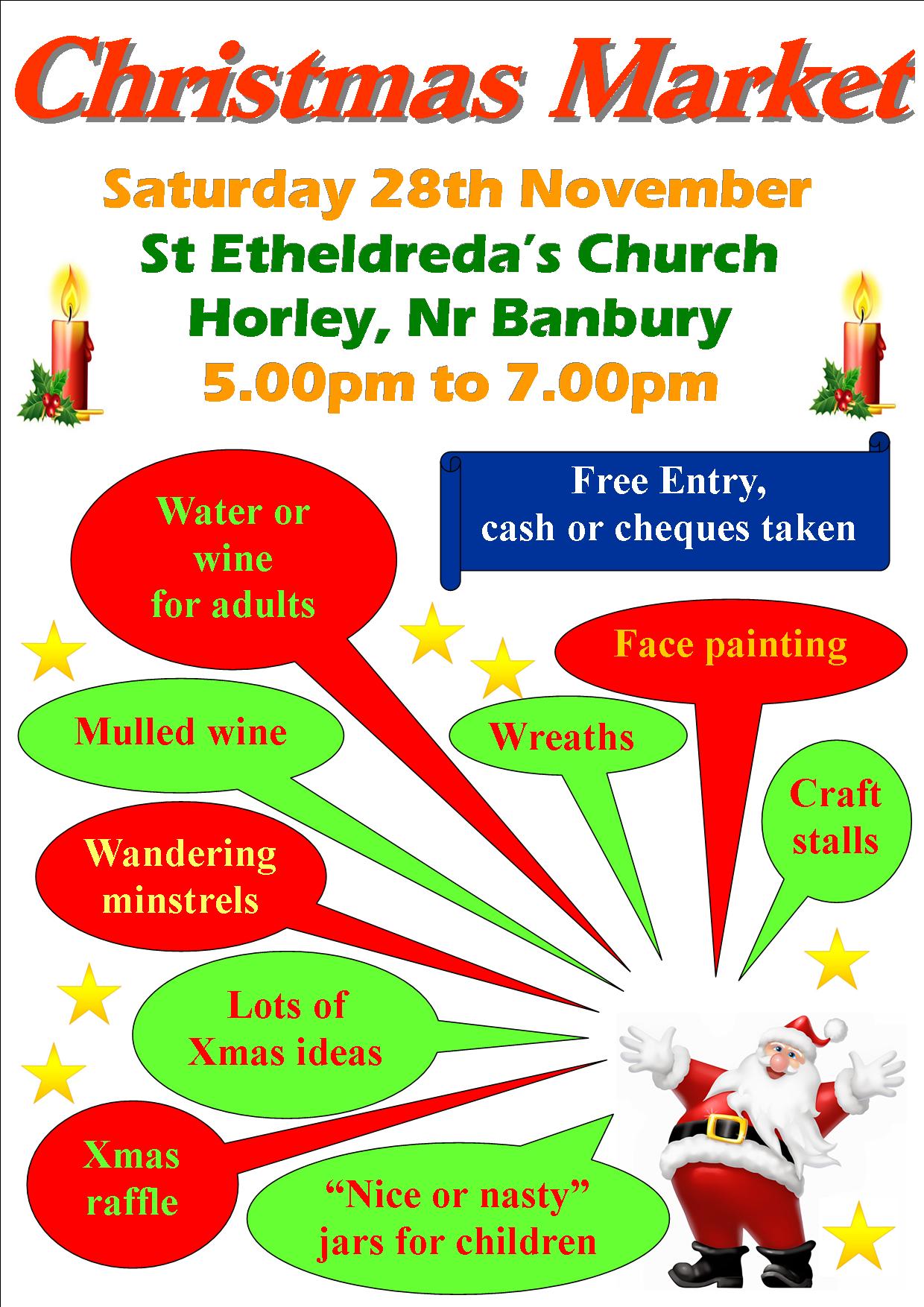
Christmas Market Poster A4 Colour

Yes it is on this Saturday,  helping you prepare for Christmas and get into the festival spirit.  We have Horley’s very own wandering minstrels to accompany us throughout the evening, some fabulous stalls bursting with home made produce and decorations,  mulled wine and mince pies , and of course, not forgetting (if you’ve been good that is)  go and see Father Christmas and his little Elf helper in his grotto

Latest news…… you may now be able to pick up your copies of A Vanished Past at the market (if any are left) they would make wonderful Christmas present (see details below)


A Vanished Past Volume 2 Vanished Past Volume 1Available Right Here in Horley,  for those of you who live in or around you will have the opportunity to pick up your copies either from Mike and Sue Patching at 2 Gullivers Close or at Horley’s Christmas Market this Saturday 28th. £30 for both Volume 1 & 2 cheques made payable to Clare Marchant 


What’s On – November

Horley’s Christmas Market

Untitled_15725447330_lOur fabulous candlelit Christmas Market is being held in St. Etheldreda’s Church on Saturday November 28th between 5 and 7pm. Thanks again to the Ladies Guild (and their little helpers) there are some lovely stalls booked, including home made produce, Christmas decorations,  mulled wine and mince pies and of course, Father Christmas and his Chief Elf will be in their grotto loaded down with presents.

Wonder if we will have Horley’s very own wandering minstrels to accompany us throughout the evening to help prepare for Christmas and get into the festival spirit???  See Pictures from last year

Horley Bell Ringers

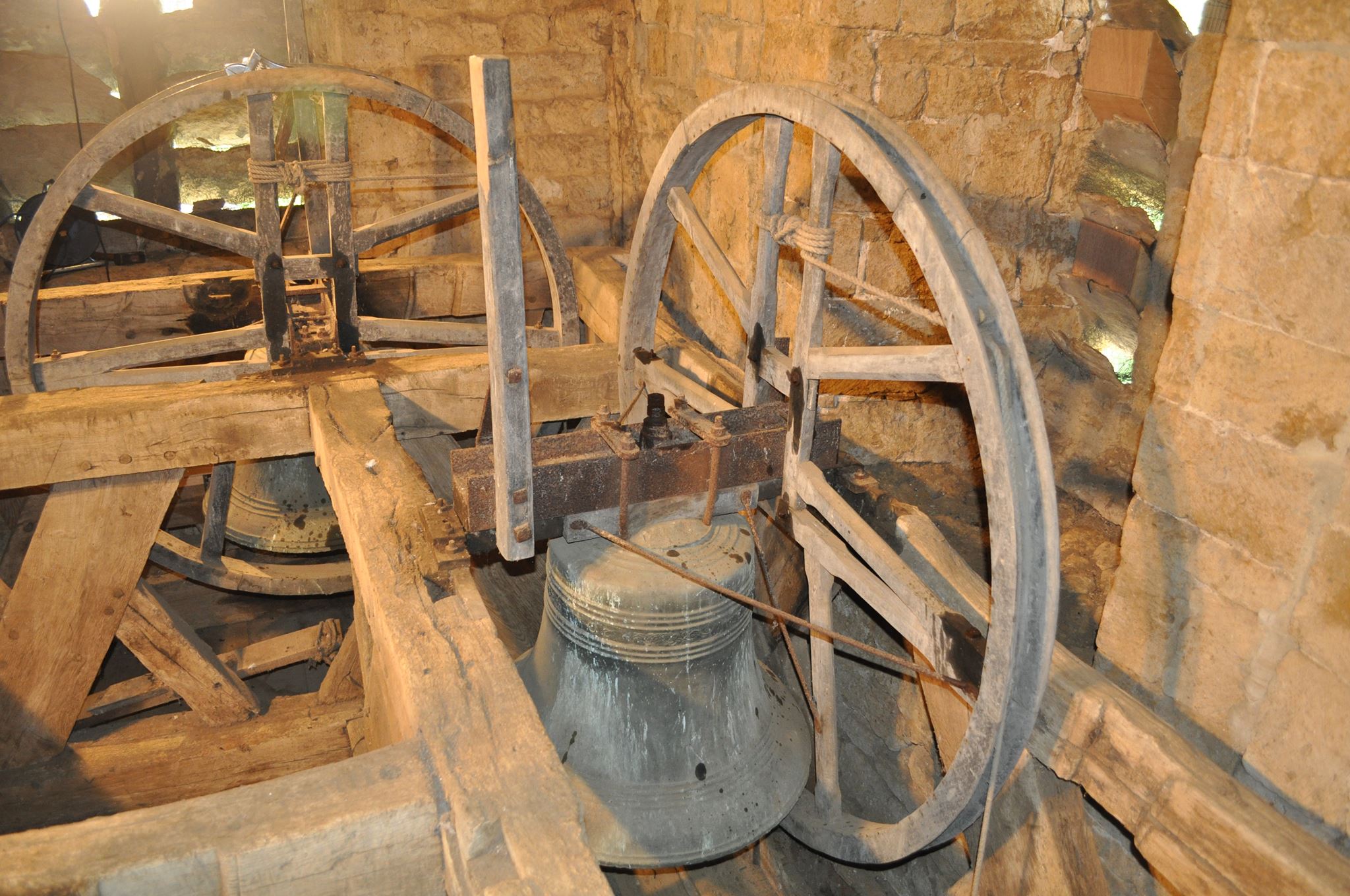
poppy-appealOn Remembrance Sunday 8th November a full peal will be rung between 14.00 and 17.00.  The band are experts so it should be high quality ringing.

What’s a peal…..?

the bellsA peal is when more than 5000 ‘changes’ are rung continuously and usually lasts about two and three quarter hours.   A ‘change’ is when the order of the bells is changed, so for example instead of ringing bells 1-2-3-4-5-6 in turn (called rounds), the order might become 2-1-34-5-6.  This is one ‘change’).    On six bells as we have in Horley, 720 different changes are possible, so to achieve the necessary number of changes for a peal,  the 720 changes will be rung seven times, each time in a different way.   As you can imagine, this requires great concentration and skill as there are no rests, breaks or swapping over ringers during the peal. 

Then there is a Horley practice on Friday 13th Nov from 7.30pm to 9pm and the Banbury Branch practice on Thurs 10th Dec from 7.30pm to 9pm

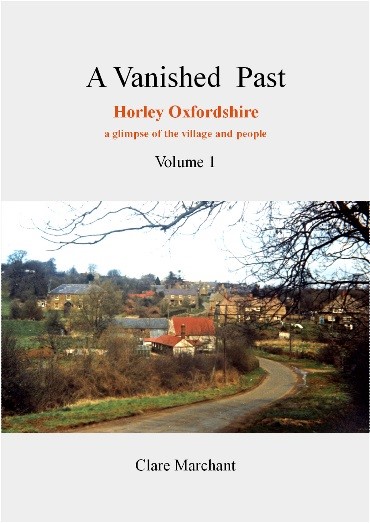
A Vanished Past:

Horley Clare Marchant Vol 1Horley Clare Marchant Vol 2

Hope your enjoying this glimpse into Horley’s past? Some aspects have really changed and yet there is something enduring about our village community that still prevails today. I have worked with Clare Marchant to “look inside” her book(s) and share an overview of the contents, contributors and the stories of life in Horley earlier in the last century.  Posted so far are:

Next we will look at the change during this period, the decline and regeneration, and take a “now and then” view.  There will be some stories of those that lived and worked in Horley in jobs such as a Cowman, a Oilman and a Farm Labourer. There will be a story by Clare’s sister that she wrote for her children about her life growing up here, a story of a couple who lived in Chapel Cottage and a actor of West End and movie fame.

Remember this is just a glimpse there is so much more, what a wonderful present it would be for Christmas, order now to avoid disappointment.

These extracts as from A Vanished Past (Vol 1 & 2), each Volume is £15 +P&P  or you can buy both for £33 incl. p&p.  They are available directly from Clare , Shaftesbury House, 15 Circus Street, Greenwich, London SE10 8SN or marchantclare@hotmail or call on 020 8858 8529. Cheques payable

Ironstone Benefice Horley Events

St_Ethelreda's_Church_Horley_Oxfordshire_-_geograph.org.uk_-_1771691[1] MHT.jpg

With Advent these days swamped by Christmas and its busyness we thought we’d try something a bit Adventish in the weeks before Advent officially begins.  We have three occasions of rather different kinds but all, we hope, helping towards a proper preparation for Christ’s coming at Christmas and his coming at the end of time in judgement.

  • Monday  9th there will be a session on Varieties of Prayer led by the Associate Vicar;
  • Monday 16th the Revd Geoff van der Weegen, Prior of the Order of Anglican Cistercians, will consider with us Pieter Brueghel the Elder’s painting The Census at Bethlehem;
  • Monday 23rd Karen Fairfax-Cholmeley, a member of Kairos Britain, which works for a just peace for Palestine, will talk about the organisation and the Palestinian situation.

All taking place in the Old School, Horley in November. starting at 7.30pm.  Admission is free and refreshments will be available. All good wishes, Hugh

And there’s more……

Want some tips on how to navigate and search all the content on our village website? Go to “About” and see the new page “Want Help Navigating?” Or just click here

All events that we are told about or pick up from Lucy’s submission go on to our calendar page, so if in doubt check it out, and as suggested if you don’t want to miss anything you can synchronise with your own calendar. You can also see what Lucy submits to the  Banbury Guardian,

The next Parish Council meeting will be held on Thursday November 12th at 7.30 in the Old School House. See the Parish Council minutes  for information and remember to check the Notice Board page for general information you maybe interested in.

You can see all the photos on and off stage from A Midsummer Night’s Dream  (these can be found in Horley Footlights, under Groups), can’t believe it’s over a month since we did this.

The header photo is courtesy of Fiona Taylor and shared via Facebook, if you have any you would like to share you can always email them to horleyviews@outlook.com.

We really enjoy feedback, did you see “What a Wonderful Village Life” , do you have any ideas, information or memories that you would like to share?

Looking forward to hearing from you …….. Di (Marriot) & Deb (Fox)

IMG_2894


A Vanished Past – Introduction

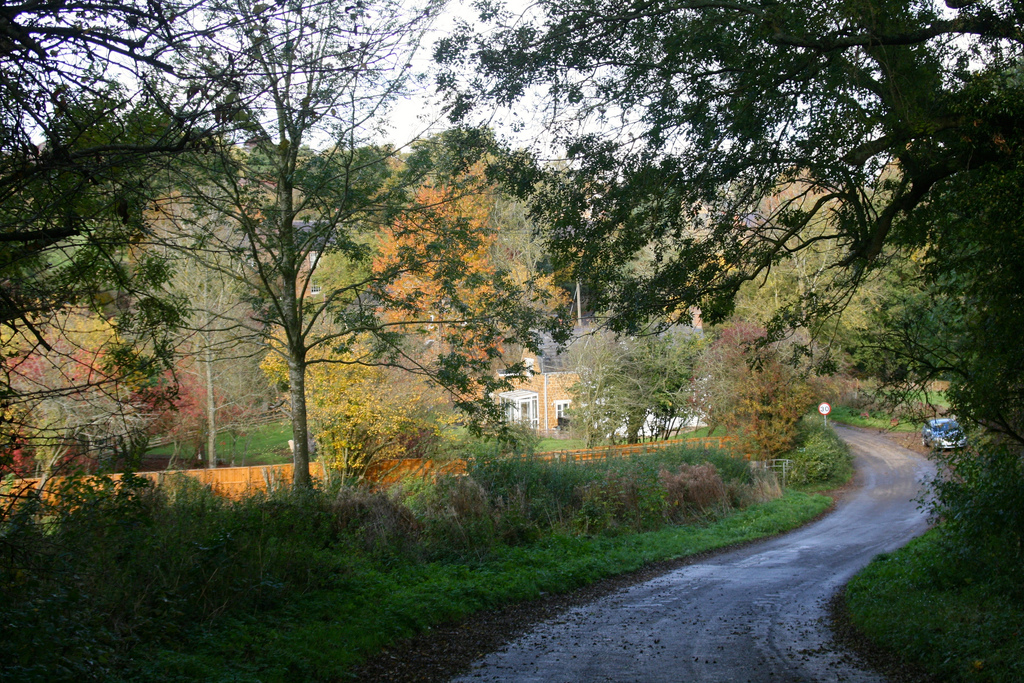
Now and then ………… as we rush about in our busy lives, why not take a few minutes this weekend, grab a coffee and read the Introduction to A Vanished Past. Think about life now and consider life then in Horley with this mid 20th century perspective: 

Wroxton Hill Oct 2015 Horley Clare Marchant Vol 1

This book is one of four volumes about Horley in the mid 20th century, mainly using the medium of photographs. It has been an enthralling and at times frustrating journey with some epic qualities – the intention and purpose changed, the route changed, and every time I thought the end was in view it was a mirage.  The 23 years of my life in Horley provided me with exceptionally rich formative experiences. I daily draw on experiences of sounds, sights and smells, and in particular I watch the seasonal changes. More important is the knowledge I gained of people, their tragedies, achievements, interpersonal relationships and values. They influenced the person I am today. Somebody asked me why I was doing this detailed work. Two reasons: the Horley we knew in the post second world war period has vanished and I thought there should be a record of it, and the people. I also wanted to leave a record of the part our family played in those 24 years.

I was brought up in Horley Vicarage. Living in The Vicarage was like living in a busy customer service office: there were people ringing at the front door, knocking at the back door, phoning, occasionally at the same time, and bundles of letters arriving daily. It felt to me as though we were at the centre of this small world. The rapid way in which my three sisters and I had to leave The Vicarage and Horley on the unexpected death of our father just after Christmas 1964 was shocking. We lost both our parents in rapid succession, and also our home, the community where we had our roots, and our friends and connections in Horley and the Banbury area. I thought we were like the seeds of a dandelion blown to the four quarters of the world. My sister Shân recently said that we were like bits of flotsam thrown about in a storm we could not control. We were given three months notice to leave The Vicarage and by Easter 1965 we had left the village.

Although this was intended to be a short book about the years 1941 to 1965 it has some material from both earlier and later times when it seemed interesting and also relevant to the life we knew. Horley as I knew it had a before and an after. Glimpses of those times put my period in context.

The greatest source of photographs has been the vast chest kept by Alice (Saunders) Bowmaker of her father’s work. John Saunders was a professional photographer of country life and family life. It means that we have some lovely stills of the Horley countryside originally destined for publication in periodicals. The quality of the original was fine. I have worked from tiny proofs, so they are not as quite as clear as John’s beautiful originals.

There are an even greater number of photographs of children playing, cooking, at school, and at leisure involving his own children, and quite a number of other children willing to put aside an hour or more to wait around (sometimes in the cold or wet) while John Saunders got his angle and light meter sorted out. They are sometimes idealised images. Should I leave them in or take them out? In the end I decided that even though they have been posed they also show some aspects of our life of which we would not otherwise have a record.

My greatest regret is that there are few photographs of the interiors of our homes. Nor is there much photographic record of the ordinary everyday activities that filled our time and which have changed so dramatically over the last 50 years: the daily chores of fetching or pumping water, laying fires, clearing and disposing of ashes, chopping sticks with an axe, breaking lumps of coal with a hammer, sieving the slack out, shovelling the coal into buckets, ensuring lamps were filled with oil and the wicks primed, keeping our homes clean without electric vacuums, washing all sheets and clothes by hand, managing the privies, or the routines of producing our food: looking after the hens, the pig, growing and harvesting vegetables and storing them for the winter, and picking a variety of fruit and preserving them in different ways.

There were whist drives, dances, chapel anniversaries, harvest festivals, fancy dress competitions, prize-givings, school plays and a whole panoply of special church services – but no-one even thought of recording them. Cameras were a rarity and a luxury. I have not come across any diaries of the period.

We have the wrong impression if we think that the village population was static. There were some families that had their roots in the 19th century Horley and several for much longer, but any glance through the censuses of the 19th century reveals a constantly changing community.

We, the people who live or lived in Horley are part of a pattern of successive waves. We make Horley our home, play a part in the community, take ownership of the houses and land and make it our own for a time. Afterwards little remains of our existence there, or indeed of the un-named people that were there before us. The movement of population has been dramatic in the last 50 years – a speeded-up version of earlier change but so radical that continuity rests with less than a handful of people and memories have been lost. This book may help to redress this imbalance a little.

Hornton Hill Oct 2015 Horley Clare Marchant Vol 2The first and second volume in this series concentrate on people; the third and fourth volumes focus on what we did in school, work, play and war.

I wanted to recreate the web of everyday life rather than the stuff of minutes or formal records, and to hint at the complicated society to which we all made some contribution.

I have consulted where possible and have valued comments and contributions from many. For the final decisions, the omissions and errors, the author is responsible and asks for the readers’ understanding.

Clare Marchant, June 2015

Clare MarchantThe is an contents extract from all volumes of A Vanished Past, each Volume is £15 +P&P  or you can buy both Volumes 1 & 2 for £33 incl. p&p.

They are available directly from Clare , Shaftesbury House, 15 Circus Street, Greenwich, London SE10 8SN or marchantclare@hotmail or call on 020 8858 8529. Cheques payable to Clare Marchant.

Clare Marchant was born in Horley Vicarage, Oxfordshire in 1941 and spent her formative years there until 1965. She now lives in Greenwich, London

First published in 2015. All rights reserved. The rights of Clare Marchant to be identified as author of this work has been asserted in accordance with the Copyright, Design and Patents Act 1988. No part of this publication may be reproduced without the consent of © Clare Marchant.  Copyright for each image rests with the contributor.


A Vanished Past Vol 2 – Who Has Contributed?

A Vanished Past, Horley Oxfordshire a glimpse of ­­the village and people. Vol.2. 

Horley Clare Marchant Vol 2

This photograph on the front cover of the view from Plot Hill is by the late Iliffe Cozens

Contents  

  • People continued from Volume 1: Morgan to Young
  • The Who’s Who of Lane Close                        100
  • Looked after children                                      102
  • Travellers                                                            106
  • Above and below the surface                        109
  • Homes and gardens                                         115
  • Families and their Animals                            137
  • Getting About                                                    153
  • Shopping, Services and Utilities                   179
  • Language and Superstition                            211

The Contributors:

The late; Mrs Gladys Barcock,  Honor (Morgan) Berry,  Mrs Florrie Dunwoody, Miss Joan Pearson, Mr Robert Pearson,  Mrs Mary (Astell) Riley, Mr Eric Turner

A-  Edward Allington, Eileen (Barcock) Alexander

B – Carol (Dunwoody) Baker, Alice (Saunders) Bowmaker for allowing free range of John Saunders’ photographs, Maureen (Eeles) Banks, Ann (Saunders) Barrett, Roy Bayliss, Mrs Kathleen Betteridge for information and photographs of the Maybury family, Mrs Harry Bishop, Jane (Tustian) Blake of Hanwell, Christopher Blythe and Richard Blythe, Betty (Hirons) Burns and her daughter Marolyn Burns

C – Mary (Bayliss) Callow, Gwenda Cliff (for information about the Roylance family), Charles Cozens and Eleanor Cozens

D – Barry Dunwoody

G- Reg and Elizabeth Green, William Griffin for material about the Bagnall family, William Gunn

H – Stanley and Wendy Hamer, Peter Hart of Hornton, Pat (Shawyer) Hassan-Jan, Doreen (Green) Hemmings, Victor and Joy Hillman, Shân (Morgan) Hoy, Mrs Dorothy Humphris for material about the Viggers and Hamer family.

J – Mary (Hemmings) Jarvis, Alison (Jelfs) Intravia, Hazel (Jelfs) Collaby, Martyn Jelfs, Jane (Kay) Jones

K – Channy Kennard for material about the Maul family

M – Anthony Meadows

O – Stephen Oliver for material about the Howe and Oliver family

P – Mike Patching, Hugh and Anna Pearson, John Plumbe for Allington photographs, Monica (Simmonds) Powell, Anthony Pratt

R – Rose (Kettle) Rawlings, Joan Robinson

S – Mrs Barbara Standish, Brian Standish, Mrs Stanley, David Stanley, Roger Sumner

T – Daphne (Bullock) Thomas, Susan (Wright) Thompson, Linda (Rose) Twistleton

U – Christine Upton for material about Horley Children’s Home

W – Phillipa (Varney) Walker

V – Timothy Varney

Other sources:
  • Mrs Audrey Turner custodian of the two Women’s Institute Scrapbooks of 1965 and 1985.
  • The Trustees of the Michael Hardinge Trust, for some of the school photographs
  • Clive Wrench and the Horley Cricket Club
  • Daniel Batchelor for permission to use photographs of the Hornton Quarries
  • David Seccull for permission to use photographs from Wroxton, The Village and its People in Photographs. 1993. Out of print.
  • Richard Milward for permission to use Richard R Jones’ watercolour of Horley.
  • The Oxfordshire County Council
  • The Banbury Museum
  • The Rector of the Ironstone Benefices and Horley PCC

Clare Marchant, June 2015

Clare MarchantThe is an contents extract from all volumes of A Vanished Past, each Volume is £15 +P&P  or you can buy both Volumes 1 & 2 for £33 incl. p&p.

They are available directly from Clare , Shaftesbury House, 15 Circus Street, Greenwich, London SE10 8SN or marchantclare@hotmail or call on 020 8858 8529. Cheques payable to Clare Marchant.

Clare Marchant was born in Horley Vicarage, Oxfordshire in 1941 and spent her formative years there until 1965. She now lives in Greenwich, London

First published in 2015. All rights reserved. The rights of Clare Marchant to be identified as author of this work has been asserted in accordance with the Copyright, Design and Patents Act 1988. No part of this publication may be reproduced without the consent of © Clare Marchant.  Copyright for each image rests with the contributor.