Tag Archives: Hornton

A Vanished Past – Time of Change (2 of 3)

A Vanished Past – Vol.1 –  A Time of Change (2 of 3)

Changes in Health provision –Robert Pearson writes about his sister Joan’s admission from The School House to hospital in the early 1920s with scarlet fever:

‘Even some of the ambulances were still horse driven in those days. A very early, traumatic experience was when Joan was perhaps five or six years of age. She was diagnosed as having scarlet fever, then a much feared disease, passed on by direct contact with somebody who already had it. Presumably, in this case, from another child in my mother’s school. It involved going into an isolation hospital on the outskirts of Banbury. I remember so well this ambulance turning up late one afternoon shortly before it got dark – so it must have been in autumn, a time of the year when this disease was most likely to strike – and Joan being driven away. It was a Dickensian scene. The driver sat outside the cab on a high seat (presumably so that he would not be contaminated), and this made the scene somewhat macabre. Consequently she was all alone for the four-mile journey into hospital. When we went to see her the next day, and on subsequent visits, we were only allowed to see into her ward through a window. It left one with a feeling of great anxiety. However, all was well and she was home again after a few weeks. In those days this infection was considered very serious, and could in the worst cases lead to death. Now one never seems to hear of it – another disease brought fully under control.’

My own early childhood in the first half of the 1940s was free of any vaccinations except a smallpox vaccine as a baby. My sisters and the rest of Horley’s child population suffered spotty bodies, fevers, vomiting, sore throats, pains in the eyes, and headaches that came as a result of measles, German measles (rubella), mumps, chicken pox and whooping cough (pertusis) as they swept round the village. Although unwelcome there were mantras murmured by tired parents that at least the illnesses were over and that the younger the child, the quicker the recovery.

The most dreaded infection was polio where there were high rates of permanent disability or death. We saw the effect on Modesta Collar who from her teenage years had to walk with a stick. In the early 1950s Peggy Ann, the little daughter of Minnie Shawyer, died of infantile paralysis as it was also known. Epidemics of the other illnesses sometimes left tragedy in their wake too, and slightly before our time a young girl in Hornton had died of diphtheria – so there was always some anxiety about the outcome.

So we stoically endured these childhood illnesses as if they were rites of passage. Strictly speaking they were not childhood illnesses. Adults were not immune from them and the impact could be far more severe. My parents’ generation could only be protected from Smallpox. My mother had two wheals on her upper arm: large oval imprints with about six needle marks in each to commemorate her inoculation as a child against this deadly disease, now almost forgotten.

However, remarkable improvements in preventive medicine were afoot – something that made life much safer for all of us. A diphtheria, tetanus and measles vaccination was introduced in the late 1940s while I was in Horley School and was administered to us by the school doctor, Dr Ann Davies and Nurse Prescott. The needles were large and extremely painful and we nursed swollen arms for a week or more. By the late 1950s BCG for Tuberculosis (TB) was introduced – administered on a cube of sugar. Shân and Honor my younger sisters both had this advantage, but teenagers of my age and older were excluded from the programme. Shân further benefitted from advances in medical knowledge and experimental surgery, saving her from the life-threatening condition myasthenia gravis.
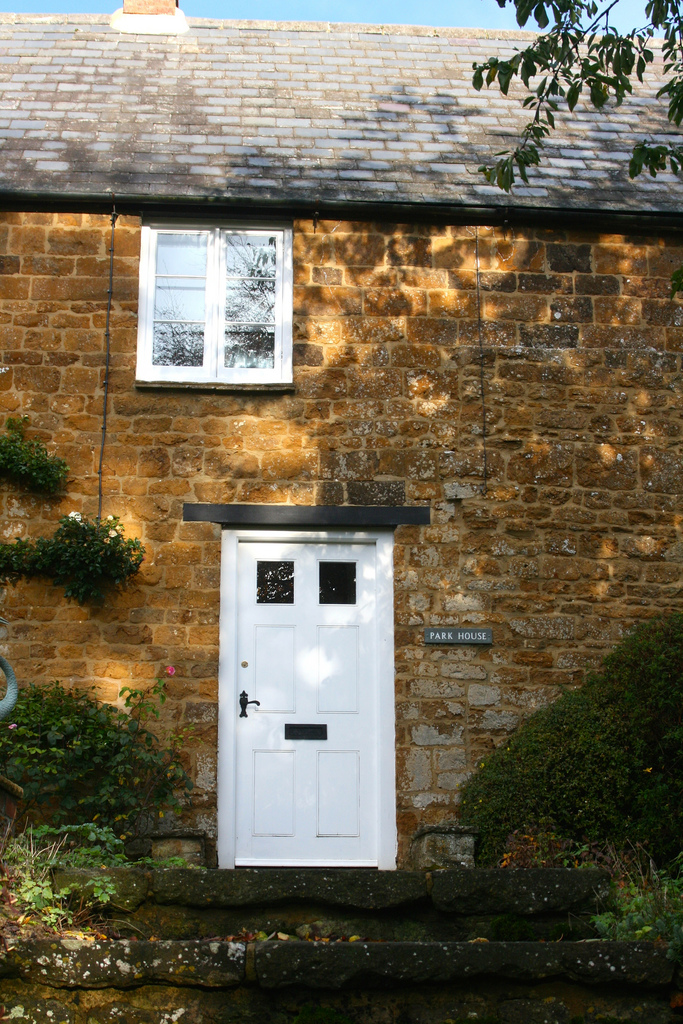
Untitled_22590132204_lEntertaining  – In the 1940s Horley’s polite society invited each other to tea. This could be modest: Barry Dunwoody remembers going with his grandmother Mrs Jelfs to have tea with Mrs Chapman and Miss Chapman at Park House where they always had tea and arrowroot biscuits.

The rules of Afternoon Tea were ritualistic. Arrival at 3.30pm in best clothes, gentle non-controversial conversation, the best (sometimes hand-embroidered) white linen tablecloth with sharply ironed fold marks and a crocheted edge, with the best china. Then either biscuits, or in affluent homes a plate of buttered bread cut extremely thinly from a loaf that had to be several days old to acquire the right refined thinness, jam in a special glass pot with its own jam spoon, and a single layer of Victoria sponge cake cut through and smeared with raspberry jam, and occasionally jam tarts.

Everyone sat upright hands in laps, no elbows on the table, small napkin on lap, bread and cake cut into small morsels and not bitten off in chunks. Children generally waited to be spoken to, and everybody waited to be offered food. It was not polite to complain about discomfort, so when Barry Dunwoody wearing short trousers had to sit on Mrs Chapman’s chair which had a seat stuffed with horse hair, he had to suffer the prickliness on his legs in silence.

One of the social niceties I found difficult to acquire was when to decline invitations to another piece of cake, when I would have liked it, and what words to use. It was at odds with the principle of always telling the truth in life. My mother also asked us not to use the words ‘I’m full up’, nor the grandiloquent ‘I have had an adequate/elegant sufficiency’. I learned to say ‘No, thank you very much’, which was a lie. It was all very difficult for a child.

The mid 1950s saw the last days of the afternoon tea ritual. Coffee and homemade cake at eleven in the morning took over – it was informal, quicker, could be fitted in after cleaning and before lunch, required less preparation, and the complications of tablecloths and napkins and sitting round a table were abandoned.

The other joy was the introduction of alcohol into our lives: sherry parties on Boxing Day, and soon sherry parties to celebrate anything. Then in the late 50s we graduated to something approaching the cocktail parties we read about in the magazines – well, not quite, not the cocktails themselves, but these were the hey-days of pearl onions, and tinned pineapple chunks with cubes of cheddar cheese speared on cocktail sticks and stuck into a grapefruit. It was all new, exciting and terribly sophisticated!

The range of food expanded beyond our dreams. Not only did bananas enter our diet after the war, but stranger things – in the early 1960s Shân Morgan, my sister bought one very expensive avocado from The Greengrocer in Warwick Road. It was hard but we were determined to like it. At the end of the 1950s it was noised abroad that a Chinese restaurant had opened in Stratford, and not long afterwards there was one in Banbury, and we self-consciously tried chopsticks. My first struggle with real spaghetti bolognese was in Oxford about the same time; and my first curry in Tiger Bay in the early 1960s. I and the rest of the UK have never looked back.

Walks –  Sunday afternoons after Sunday School was a time when families who had not fallen asleep after the Sunday roast would take a walk along the roads out of the village, joining up with each other and taking time to have leisurely conversations. In urban or seaside places it might have been called promenading. It was more strolling than power-walking: parents chatting and children and dogs dashing off into the hedgerows and fields.

Until the early 1960s there was still a tradition that Sunday was a day of rest, and so Jim Eadon of Chapel Cottage who never darkened the doorway of either church or chapel, was deeply offended that his neighbour Theo Peake of Hillside Farm had a modern suburban habit of motor-mowing his lawn on Sunday afternoon.

Saturday night was by custom bath night. On Sunday people discarded their work clothes, cleaned their shoes, and wore their best clothes to go to services.

For a number of families the day was ordered by the times of the church and chapel services, and this was signalled by the church bells so the whole village knew. On a still day this was reiterated by the sound of Drayton’s bells drifting across the fields. Although there were always animals that needed attention, farmers did not plough or even harvest on Sunday unless it was urgent – partly because the labour was not available.

But this was a time of change: young bellringers left the village and the bells ceased to ring. The seven-day imperatives of the food market and the efficient use of expensive farm machines prevailed. As more people bought motorbikes and cars, Sunday the day of rest was spent away from the village.

On weekday afternoons mothers with prams or push chairs might take a brisk walk before other children came home from school. No parents ever walked to the school to meet their child – there was not the time to do so, and it was not the custom.

Coming up in the 3rd and final part:

  • The decline of the village
  • The Impact of the two World Wars
  • The Evacuees and other Strangers
  • Agricultural mechanisation
  • Thatched roofs
  • A Better Britain – Regenerating Horley
  • Secondary Education –
  • Abandoned Untidiness to Village pride
  • The New Council Houses

Clare Marchant, June 2015
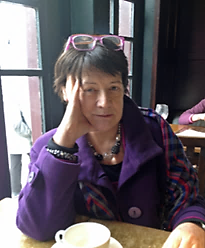
Clare MarchantThe is an extract from A Vanished Past Volume 1, each Volume is £15 +P&P  or you can buy both for £33 incl. p&p.

They are available directly from Clare , Shaftesbury House, 15 Circus Street, Greenwich, London SE10 8SN or marchantclare@hotmail or call on 020 8858 8529. Cheques payable to Clare Marchant.

Clare Marchant was born in Horley Vicarage, Oxfordshire in 1941 and spent her formative years there until 1965. She now lives in Greenwich, London

First published in 2015. All rights reserved. The rights of Clare Marchant to be identified as author of this work has been asserted in accordance with the Copyright, Design and Patents Act 1988. No part of this publication may be reproduced without the consent of © Clare Marchant.  Copyright for each image rests with the contributor.


A Vanished Past – Time of Change (1 of 3)

A Vanished Past – Vol.1 –  A Time of Change (1 of 3)

 The 1920s and 1930s Robert Pearson wrote elegantly about his childhood for his children:

‘My boyhood years, in the 1920s and 1930s, were not all that far removed from the late 19th century, extraordinary as that seems now that we are in the 21st century, and village life then reflected this in many ways. The importance of the church and the Vicar in village life; the squire (country gentleman and major landowner); people of independent means; local tradespeople, and what could be classified loosely as ‘working people’. It was a society set in aspic – how things had been for hundreds of years, little affected by the Industrial Revolution of the late 18th and early 19th centuries when centres of manufacture had, with mechanisation, been transformed. In the towns so affected, the links with the past had been largely severed, so there was this dichotomy between these places and rural areas which has taken many decades to develop some kind of equilibrium. But not for much longer would rural areas remain unaffected. Generally speaking, rural areas nowadays, except the most remote, enjoy most of the facilities available to town and city dwellers – and certainly essential ones.’

A Time of Change By Honor Berry and Clare Marchant

When we were young the oldest people in our village could remember back as far as the 1880s. They recalled how they had coped with the difficulties of wars (always fought far away), varying weather conditions, and epidemics. During their childhoods change had come to the village slowly. The old men and women had seen the drift of people away from the village into the towns with the improvements in the efficiency of farm implements. They had witnessed a revolution in transport and felt the influences of a number of new inventions, but even if their generation had all received compulsory schooling, which their forebears had not, the way of life of many people, although improving, was not so very different from a hundred years before.

Traditionally the working-men of Horley laboured on the farms. Some were in domestic service along with the women. All were beholden to the handful of middle-class families in the village, the landowners who employed them, and they worked long arduous hours in poor conditions for low wages.

Bagnall and EnglandAfter a life-time working on the land in all weathers, the men looked old once they had reached their sixties. The leather gaiters that they wore marked them out as belonging to a different age from ours. The women fared rather worse. If they had not adopted the modern ways with ‘perms’ and hair-colouring, their hair became grey and wispy and was normally twisted back into a bun. But the most telling sign of age was the loss of teeth: older people were toothless though they had an immaculate set of false teeth recognisable by their whiteness and regularity, which were often so uncomfortable they were only worn on special occasions. Restricted diets in the past had not made strong bones and elderly people in our village suffered a good deal of lumbago, arthritis, rheumatism and chest complaints. Nonetheless they had learned to be hardy and lived stoically with illness and disease.

To us as children in the 1940s the village and its people seemed as though it had been like that forever. Changes seemed very few and very slow, but we did not understand that we were a generation with different expectations and we did expect things would get better after the war. However, we could never have envisaged in our wildest dreams quite how far our lives would change and how comfortable we would become.

horley-the-village-c1955_h234002_large copy right @the francis frith collectionBy 1950 Horley along with all the other villages in the country was beginning to feel the influence of social and economic change and development that would finally see the end of the working village. The change while it brought undoubted benefits that made everyday living more comfortable, was quicker than any previously experienced. The elderly remarked on it constantly and told us that the alteration was so complete that nothing remained the same. We found this hard to understand. The village looked to us as if it had not changed for decades. There were no new buildings other than the six Old Council Houses that had been built between the wars, and the four Manor Cottages that replaced the thatched cottages destroyed by fire. Most houses still had no electricity, no running water and no sewerage system. But it was not that which they were talking about. The loss they felt was of the village society, for they had witnessed the almost total disintegration of a thriving agricultural community, and had we understood the significance of the evidence available to us, we could have seen that there was plenty to support their claims.

The Old Mill & Mrs Highham use collection of Maureen Banks

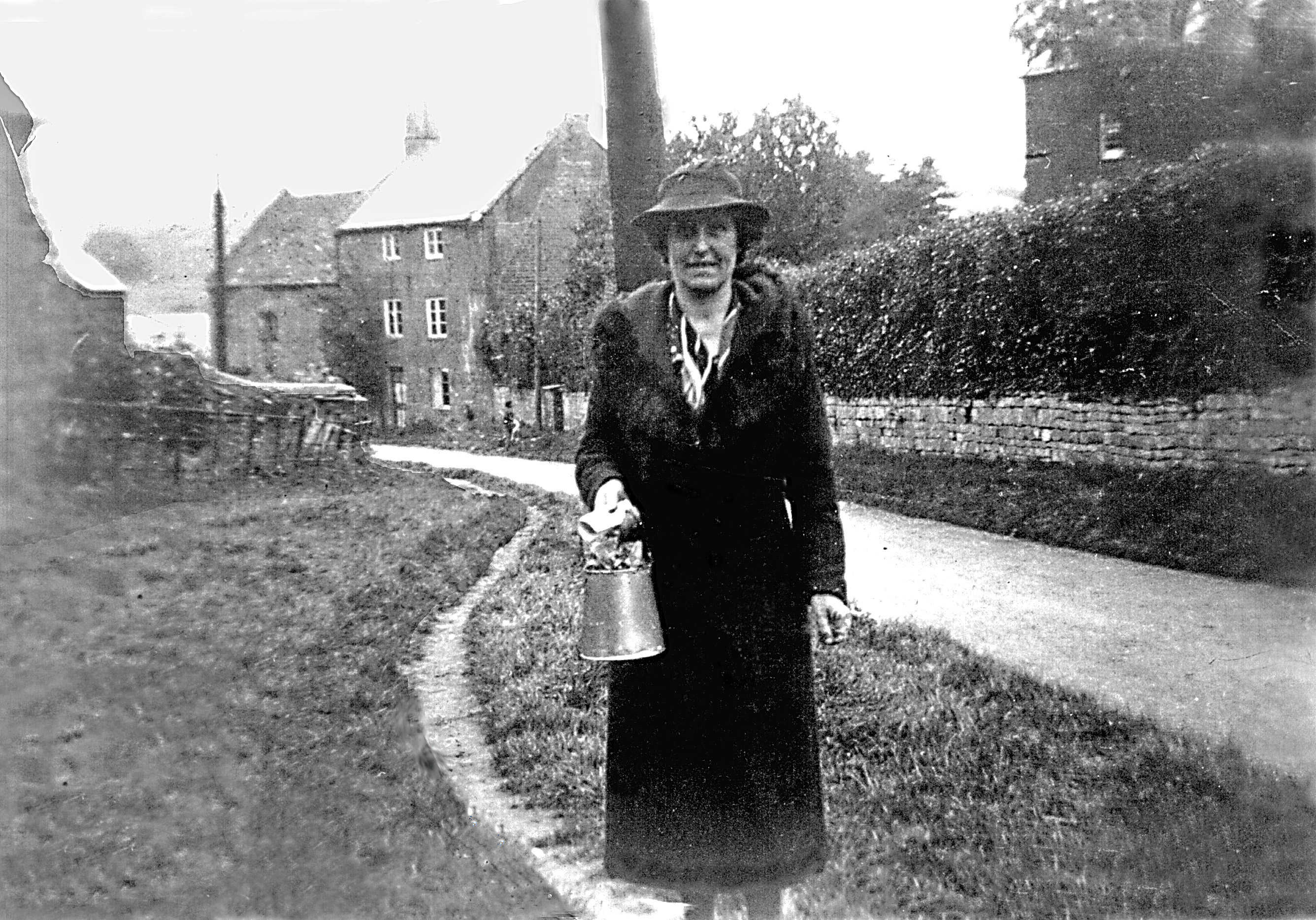
Mrs Higham of 5 The Old Council Houses fetching milk with The Mill (in the background)

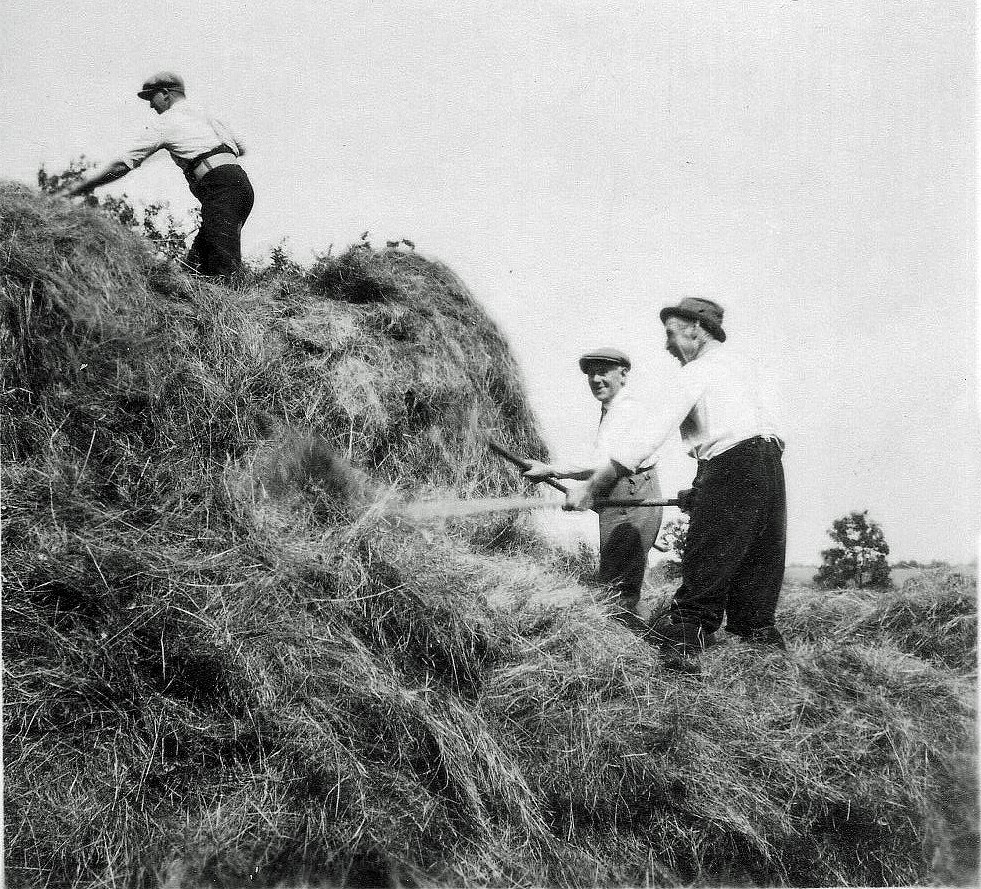
The main period of this book, 1940-65, was the end of an era.The Second World War delayed progress for a while. In the 1940s our milk still came warm from the cows, unpasteurised, in a churn or bucket and at the door was ladled out into the jugs or cans housewives provided. Horses were still used in the fields. At harvest time men came home from work in Banbury or on the Ironstone, had their dinner/tea and then went to help harvesting until, even with double summer-time[1], the dusk settled over the countryside. I remember waking up as the harvesters went past The Vicarage singing. Older women still went gleaning at harvest time, families went sticking (gathering firewood), and men went ferreting to catch rabbits for family consumption.

Decay seemed to lie all around us. There was not much building in the years after the war for there were not the materials or the money – indeed building was forbidden without a licence. After the prisoners of war had left Horley House, and the sad, Displaced Persons found a job, Horley House which had once been the main house in the village, lay unoccupied and increasingly dilapidated, the drive closed in by overgrown laurels. Bought at a knock-down price (no-one could afford the cost of keeping large houses), the lead tanks in the attics were removed by the Banbury building company that had bought it and sold for scrap.

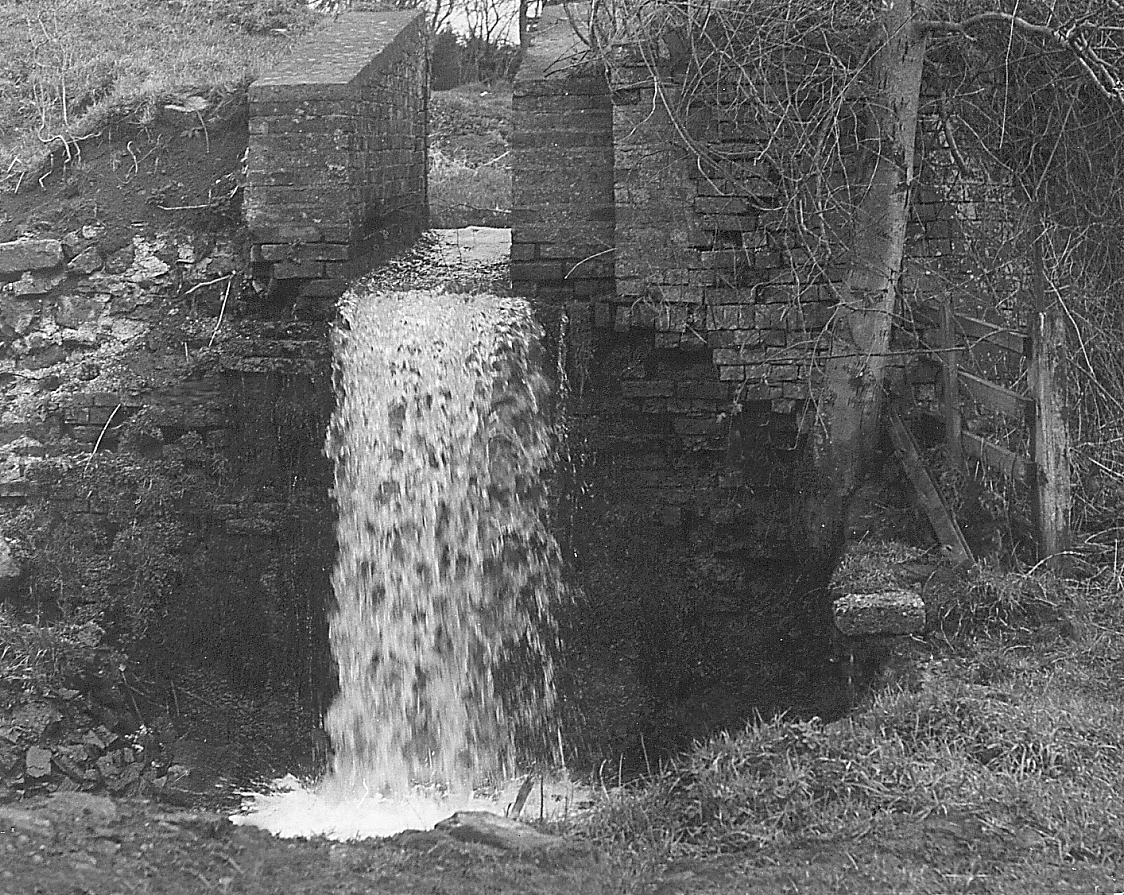
Horley Mill Race John Saunders courtesy Patching TrusteesIt was during the immediate post-war period that the unused mill was reduced to one storey and the stone used for a house in Alkerton. A crowd gathered one sunny afternoon to see the upper storeys being taken down. At this time Horley was very poor. It was a period when some people were forced to mend holes in windows with sacking stuffed with straw; when thatch was patched and paint peeled from windows and front doors, and paint, if available, was black, dark green or brown, giving the village a severe and sombre aspect.

The nearby Oxfordshire Ironstone Company offered welcome alternatives to farm labouring and thrived during the Second World War and 1950s, then declined and suddenly closed in the late 60s. As a consequence more men had to look outside the village to seek work in Banbury or become self-employed.

Socially it was a different time with different values and ways of doing things. Although there were fewer and fewer people working on the land, the vast majority of people came from agricultural families either in Horley or in other villages. So we saw ourselves as an agricultural village. Culturally we inherited all sorts of assumed rights. There was an unspoken and unchallenged belief that farmers managed the land, but the countryside belonged to everyone. For our part we shut gates, walked around the edge of fields with hay or other crops, and did not allow dogs to chase cattle or sheep. I never appreciated the great freedom I had wandering over the fields, playing in the ponds and spinneys. It was my world. No mobile telephones for my parents to keep tabs on me. I never considered it would ever be otherwise.

Living in a small community could be intense and feelings could run high leading to hurt pride and angry disagreements that were never resolved. But there were also deep friendships which stood the test of time.

The village was also divided by those who went to Chapel or to Church – some people went to both at different times, and some went to neither.

Coming up in part 2 and 3:

  • Changes in Health provision
  • Entertaining
  • Walks
  •  The decline of the village
  • The Impact of the two World Wars
  •  The Evacuees and other Strangers
  • Agricultural mechanisation
  • Thatched roofs
  • The Arrival of Electricity, Water and The Main Drain
  • A Better Britain – Regenerating Horley
  • Secondary Education
  • Abandoned Untidiness to Village pride
  • Vestiges of a Feudal Society
  • The New Council Houses

Clare Marchant, June 2015

Clare MarchantThe is an extract from A Vanished Past Volume 1, each Volume is £15 +P&P  or you can buy both for £33 incl. p&p.

They are available directly from Clare , Shaftesbury House, 15 Circus Street, Greenwich, London SE10 8SN or marchantclare@hotmail or call on 020 8858 8529. Cheques payable to Clare Marchant.

Clare Marchant was born in Horley Vicarage, Oxfordshire in 1941 and spent her formative years there until 1965. She now lives in Greenwich, London

First published in 2015. All rights reserved. The rights of Clare Marchant to be identified as author of this work has been asserted in accordance with the Copyright, Design and Patents Act 1988. No part of this publication may be reproduced without the consent of © Clare Marchant.  Copyright for each image rests with the contributor.

[1] Clocks were two hours ahead of Greenwich Mean Time, so darkness fell after 10pm


A Vanished Past Vol 2 – Who Has Contributed?

A Vanished Past, Horley Oxfordshire a glimpse of ­­the village and people. Vol.2. 

Horley Clare Marchant Vol 2

This photograph on the front cover of the view from Plot Hill is by the late Iliffe Cozens

Contents  

  • People continued from Volume 1: Morgan to Young
  • The Who’s Who of Lane Close                        100
  • Looked after children                                      102
  • Travellers                                                            106
  • Above and below the surface                        109
  • Homes and gardens                                         115
  • Families and their Animals                            137
  • Getting About                                                    153
  • Shopping, Services and Utilities                   179
  • Language and Superstition                            211

The Contributors:

The late; Mrs Gladys Barcock,  Honor (Morgan) Berry,  Mrs Florrie Dunwoody, Miss Joan Pearson, Mr Robert Pearson,  Mrs Mary (Astell) Riley, Mr Eric Turner

A-  Edward Allington, Eileen (Barcock) Alexander

B – Carol (Dunwoody) Baker, Alice (Saunders) Bowmaker for allowing free range of John Saunders’ photographs, Maureen (Eeles) Banks, Ann (Saunders) Barrett, Roy Bayliss, Mrs Kathleen Betteridge for information and photographs of the Maybury family, Mrs Harry Bishop, Jane (Tustian) Blake of Hanwell, Christopher Blythe and Richard Blythe, Betty (Hirons) Burns and her daughter Marolyn Burns

C – Mary (Bayliss) Callow, Gwenda Cliff (for information about the Roylance family), Charles Cozens and Eleanor Cozens

D – Barry Dunwoody

G- Reg and Elizabeth Green, William Griffin for material about the Bagnall family, William Gunn

H – Stanley and Wendy Hamer, Peter Hart of Hornton, Pat (Shawyer) Hassan-Jan, Doreen (Green) Hemmings, Victor and Joy Hillman, Shân (Morgan) Hoy, Mrs Dorothy Humphris for material about the Viggers and Hamer family.

J – Mary (Hemmings) Jarvis, Alison (Jelfs) Intravia, Hazel (Jelfs) Collaby, Martyn Jelfs, Jane (Kay) Jones

K – Channy Kennard for material about the Maul family

M – Anthony Meadows

O – Stephen Oliver for material about the Howe and Oliver family

P – Mike Patching, Hugh and Anna Pearson, John Plumbe for Allington photographs, Monica (Simmonds) Powell, Anthony Pratt

R – Rose (Kettle) Rawlings, Joan Robinson

S – Mrs Barbara Standish, Brian Standish, Mrs Stanley, David Stanley, Roger Sumner

T – Daphne (Bullock) Thomas, Susan (Wright) Thompson, Linda (Rose) Twistleton

U – Christine Upton for material about Horley Children’s Home

W – Phillipa (Varney) Walker

V – Timothy Varney

Other sources:
  • Mrs Audrey Turner custodian of the two Women’s Institute Scrapbooks of 1965 and 1985.
  • The Trustees of the Michael Hardinge Trust, for some of the school photographs
  • Clive Wrench and the Horley Cricket Club
  • Daniel Batchelor for permission to use photographs of the Hornton Quarries
  • David Seccull for permission to use photographs from Wroxton, The Village and its People in Photographs. 1993. Out of print.
  • Richard Milward for permission to use Richard R Jones’ watercolour of Horley.
  • The Oxfordshire County Council
  • The Banbury Museum
  • The Rector of the Ironstone Benefices and Horley PCC

Clare Marchant, June 2015

Clare MarchantThe is an contents extract from all volumes of A Vanished Past, each Volume is £15 +P&P  or you can buy both Volumes 1 & 2 for £33 incl. p&p.

They are available directly from Clare , Shaftesbury House, 15 Circus Street, Greenwich, London SE10 8SN or marchantclare@hotmail or call on 020 8858 8529. Cheques payable to Clare Marchant.

Clare Marchant was born in Horley Vicarage, Oxfordshire in 1941 and spent her formative years there until 1965. She now lives in Greenwich, London

First published in 2015. All rights reserved. The rights of Clare Marchant to be identified as author of this work has been asserted in accordance with the Copyright, Design and Patents Act 1988. No part of this publication may be reproduced without the consent of © Clare Marchant.  Copyright for each image rests with the contributor.
A Vanished Past Vol.1 – Who Has Contributed, Who’s Missing ?

A Vanished Past, Horley Oxfordshire a glimpse of ­­the village and people. Vol.1Horley Clare Marchant Vol 1

The photograph on the front cover of Horley from the Wroxton Hill is by Clare Marchant

Contents

  • Introduction [ featured in a separate post ] and Contributors
  • A map of Horley in relation to Banbury and other north Oxfordshire villages
  • Change [ featured in a separate post ]
  • People in alphabetical family surname order:  Allington to Meadows

The Contributors

People have been very generous with their photographs – taking time to search them out from lofts, boxes and cupboards – often bringing back happy times, but also difficult or tragic times and half-forgotten events. Not everyone would have chosen to share these records of their lives. For me it put together parts of a jigsaw about a way of life that no longer exists, and puts flesh on the ghosts of my memories.

I have a long list of people to thank: You will see that I give many people a formal title – which is because that was how they were known in the 1940s-1960s – first names were only used between very close friends – usually those that had been to school together.

The late – Mrs Gladys Barcock,  Honor (Morgan) Berry,  Mrs Florrie Dunwoody, Miss Joan Pearson, Mr Robert Pearson, Mrs Mary (Astell) Riley, Mr Eric Turner

A – Edward Allington, Eileen (Barcock) Alexander

B – Carol (Dunwoody) Baker, Alice (Saunders) Bowmaker for allowing free range of John Saunders’ photographs, Maureen (Eeles) Banks, Ann (Saunders) Barrett, Roy Bayliss, Mrs Kathleen Betteridge for information and photographs of the Maybury family, Mrs Harry Bishop, Jane (Tustian) Blake of Hanwell, Christopher Blythe and Richard Blythe, Betty (Hirons) Burns and her daughter Marolyn Burns.

C – Mary (Bayliss) Callow, Gwenda Cliff (for information about the Roylance family), Charles Cozens, Eleanor Cozens,

D – Barry Dunwoody

G – Reg and Elizabeth Green, William Griffin for material about the Bagnall family, William Gunn

H – Stanley and Wendy Hamer, Peter Hart of Hornton, Pat (Shawyer) Hassan-Jan, Doreen (Green) Hemmings, Victor and Joy Hillman, Shân (Morgan) Hoy, Mrs Dorothy Humphris for material about the Viggers and Hamer family

J – Mary (Hemmings) Jarvis, Alison (Jelfs) Intravia, Hazel (Jelfs) Collaby, Martyn Jelfs, Jane (Kay) Jones,

K – Channy Kennard for material about the Maul family, Anthony Meadows, Stephen Oliver for material about the Howe and Oliver family

P – Mike Patching, Hugh and Anna Pearson, John Plumbe for Allington photographs, Monica (Simmonds) Powell, Anthony Pratt

R – Rose (Kettle) Rawlings, Joan Robinson

S – Mrs Barbara Standish, Brian Standish, Mrs Stanley, David Stanley, Roger Sumner,

T- Daphne (Bullock) Thomas, Linda (Rose) Twistleton, Christine Upton for material about Horley Children’s Home

V – Phillipa (Varney) Walker, Timothy Varney

Other sources

  • Mrs Audrey Turner custodian of the two Womens Institute Scrapbooks of 1965 and 1985
  • The Trustees of the Michael Hardinge Trust, for some of the school photographs
  • Clive Wrench and the Horley Cricket Club
  • Daniel Batchelor for permission to use photographs of the Hornton Quarries
  • David Seccull for permission to use photographs from Wroxton, The Village and its People in Photographs. 1993. Out of print.
  • Richard Milward for permission to use Richard R Jones’ watercolour of Horley.
  • The Oxfordshire County Council
  • The Banbury Museum
  • The Rector of the Ironstone Benefices and Horley PCC

Who is missing?

There are people for whom I have been unable to trace any photographic record: William and Sarah Saul, the Misses Barrett, Dorothy Varney and her mother Laura, May Cripps and others from Horley Home, Mrs West, Edwin Walden, Mr and Mrs Percy Matthews and their son Billy, Mrs Lizzie and Miss Bessie Chapman of Park House, the Baillies of The Manor, Mr William Astell of Bramshill Park Farm, Mr and Mrs Partridge of Brook Cottage, the Misses Godson of Horley Cottage, Mr Tom Allington, The Clarks and their son Paul, Mr William and Mrs Hicks Snr, Mrs Campbell of the Firs, Mr and Mrs Turner, and others who peopled our life between 1941 and 1965.

If you have a photograph of any of them, or know someone who may, please let me know. My email address is at the front of this book. ( marchantclare@hotmail.com )

On the other hand there has been a huge treasure trove of photographs of people that might otherwise have remained ghostly images in the mind: including one of Mrs Herbert, another of Mrs Edwin Walden, and one of Fanny Walden, all strong characters in our childhood, who seemed to come from a different age.

I am grateful that my sisters Shân and Honor allowed me to plunder their earlier writing about Horley life which they had written for their children. I was lucky to have ready access to Honor’s quite remarkable and detailed memory. She was deeply interested in this volume about people, and I grieve that she died just before its completion. I owe a debt to my parents, Glyn and Elma Morgan, Horley’s Vicar and his wife during the period of this book. I hope something of their affection for Horley and its people emerges and that I reveal something of the active part they played in village life.

It is only now I fully understand why writers always thank their partners for their contribution. Harold has been exceptionally patient and tolerant: papers have covered the floors and tables, meals have been forgotten, of my alternating fury and despair when a computer virus destroyed material (thank you to everyone who went up into their lofts again) and things have been neglected or forgotten. He must now consider he knows as much about Horley and Horley people as anyone who lived there. He has checked what I have written, offered insights and made helpful comments. Thank you Harold for supporting this absorbing and time-consuming work.

Clare Marchant, June 2015

Clare MarchantThe is an extract from A Vanished Past Volume 1, each Volume is £15 +P&P  or you can buy both for £33 incl. p&p.

They are available directly from Clare , Shaftesbury House, 15 Circus Street, Greenwich, London SE10 8SN or marchantclare@hotmail or call on 020 8858 8529. Cheques payable to Clare Marchant.

Clare Marchant was born in Horley Vicarage, Oxfordshire in 1941 and spent her formative years there until 1965. She now lives in Greenwich, London

First published in 2015. All rights reserved. The rights of Clare Marchant to be identified as author of this work has been asserted in accordance with the Copyright, Design and Patents Act 1988. No part of this publication may be reproduced without the consent of © Clare Marchant.  Copyright for each image rests with the contributor.
A Vanished Past – What’s in the Volumes?

A Vanished Past; Horley Families, Homes and Gardens

Life as lived in a North Oxfordshire village in the mid-twentieth century is depicted with skill and honesty, and illustrated by absorbingly interesting photographs. The residents give remarkably honest insights into their lives – their successes, joys and sadness over time.

These were the last days of an agricultural village. It is a story about the structure of village life, and its changes over several decades, seen through the eyes of the residents, drawn together by a sensitive author and illustrated by 500 or so amateur and professional photographs.

The first and second volume in this series concentrate on people;

Horley Clare Marchant Vol 1Volume 1 (in print)

  • Introduction and Contributors
  • A map of Horley in relation to Banbury and other north Oxfordshire villages
  • Change
  • People in alphabetical family surname order:  Allington to Meadows

Horley Clare Marchant Vol 2

  • Volume 2 (in print)
  • People in alphabetical family surname order: Morgan to Yates
  • People of Lane Close
  • Homes & Gardens
  • Our animals
  • Getting about
  • Water and sewage
  • Services: post, papers, deliveries, mobile library, police and the  shop

Volume 3 will be about Work and Leisure.   Volume 4 will include chapters on the School, Chapel, Church and Wartime as well as memorable views of the village and countryside:

  • Leisure: including walks, wheels, swimming, Brownies, clubs, May Days, Coronation Day 1953, fêtes, cricket and football, hunting, the Banbury Fair and fireworks
  • Farming
  • The Ironstone
  • Women and work
  • Working from home
  • The School
  • The Church and Vicarage
  • The Methodist Chapel
  • World War I
  • World War II
  • Men who were called up
  • National Service
  • The Home Guard
  • Wartime in Horley
  • Our environment – village and countryside

Clare Marchant, June 2015

Clare MarchantThese table of contents are extract from volumes of A Vanished Past, each Volume is £15 +P&P  or you can buy both Volumes 1 & 2 for £33 incl. p&p.

They are available directly from Clare , Shaftesbury House, 15 Circus Street, Greenwich, London SE10 8SN or marchantclare@hotmail or call on 020 8858 8529. Cheques payable to Clare Marchant.

Clare Marchant was born in Horley Vicarage, Oxfordshire in 1941 and spent her formative years there until 1965. She now lives in Greenwich, London

First published in 2015. All rights reserved. The rights of Clare Marchant to be identified as author of this work has been asserted in accordance with the Copyright, Design and Patents Act 1988. No part of this publication may be reproduced without the consent of © Clare Marchant.  Copyright for each image rests with the contributor.

What’s Coming Next Week – 12th October

Due to a last minute surge in events we thought you might like to see what’s on next week and also remind you that you can sync your calendar with Horley Views , so that you will never miss a reminder of what’s on. Remember if you have a event or something you want to promote just email us at horleyviews@outlook.com or point us to the online resource you would like to share, and please let’s us know how you got on, just like Tash and Dave did at the Harvest Auction. Regards Deb 

w.c 12th October

JUDAISM IN BRITAIN TODAY – On Monday the 12th of October we are delighted to have secured Penny Faust from the Oxford Synagogue she is coming to outline aspects of Jewish Life . Penny did research in child psychology before stopping to have 4 children and then went into broadcasting/journalism including being a regular contributor to BBC Radio 4’s – Thought for the Day for 12 years and to World Service religious broadcasting. She has also worked in education and currently contributes to the Oxford Mail on an ad hoc basis. This event will be held at St John the Baptist Church Hornton, at 7.30pm and refreshments will be on offer beforehand and during the interval, as they were in Wroxton. So please do come along as the Church can seat 114 people and this will be a fascinating insightful evening.

3H’s GARDENING CLUB – On Tuesday 13th October at 7:30pm in the Pavilion at Hornton there will be a slide show and talk given by Howard Drury, a Lincolnshire Lad, trained Edinburgh Botanics, 610 Gardening Programmes for Central TV Gardener  and gives talks on almost 100 subjects  and also into computers! The topic is a surprise, always informative and entertaining as he is a regular presenter at the club. All welcome Thanks Brian A

BELL RINGING PRACTICE – Friday 16th Oct from 1815 to 1945 – practice in St Etheldreda’s Church Horley

IRONSTONE BENEFICE CAFE CHURCH – Sunday 18th October  – St Etheldreda’s Church Horley , 10:30am Harvest around the world, Refreshments and activities for all ages

church cafe

We Are A Digital Year Old – August 2015

The  Horley Views went digital with its first post  “And There Was A Secret Horley Fest” on 17th August 2014. Actually it was a repost of a blog that Carlie Lee wrote a year earlier about Horley Fest. Since then we have put up over 150 posts on the home page newsfeed (blog) and created 61 pages about Horley on the website. Most of the content has been provided by our villagers who organise the many groups and activities. THANK YOU for your efforts; you are the backbone of our small but perfectly formed community.

We Brits are not big on that “praise thang” however everyone that Di and I have spoken to about thehorleyviews.com have said that they really enjoy reading it. We also know that over 80 of you that follow via email and wordpress, as well as just over 200 on Facebook and Twitter. Some of you have told me they have book marked us as a favourite and check in regularly.

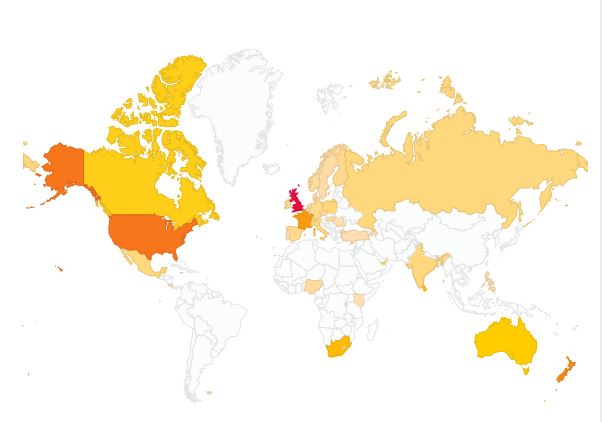
One of the reasons social media is so brilliant is that we can instantly see if the content is being looked at. There are stats for the number of views, visitors, whether they come direct or via another media. We can create graphs such this one below showing by country the 10, 500 views that, 9,500 as you would expect are in the UK.  We can be pretty sure on who is viewing in the US, France, Bahrain and those down under but who knew our little corner of North Oxfordshire was so global!THV global readership

Another aspect of social media that helps is the fact that we instantly share the posts with our twitter feed (@horleyviews) and Facebook page (horley.views). We also follow with other Horley groups such as the Horley Cricket Club site, or on facebook Horley Playgroup , these and many Other Links, Local Villages and Gastropubs as seen in the right column, be sure to scroll down.

We have a rising star in out midst as Judy has not only found fame on our website and Facebook pages but now even has her own twitter hashtag …. #SelfieWithJudy

4th July selfy with JudyJudy and Jackselfiewith judyposty selfie with Judy


What started out as an online news feed for Horley Views Magazine has become a website for all our activities and where Horley Parish Council can openly share its information. We are also really pleased to be able to share some of our Pub’s successes and events – Dave and Natasha are really at the heart this village. But our boundaries don’t stop at the 30mph sign – we also have close ties with our neighbours especially Hornton and Hanwell, and families and friends who live there and nearby.

So what’s in store for our second digital year???

Well it’s up to you; it’s your resource and you can share whatever you would like, in whatever format. We would love to get more people involved and support any ideas you may have. You don’t have to understand the technology you just need to be passionate about something and want to share it.

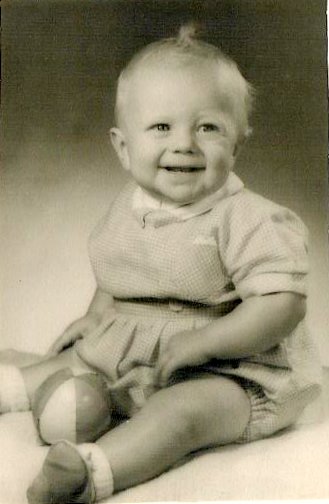
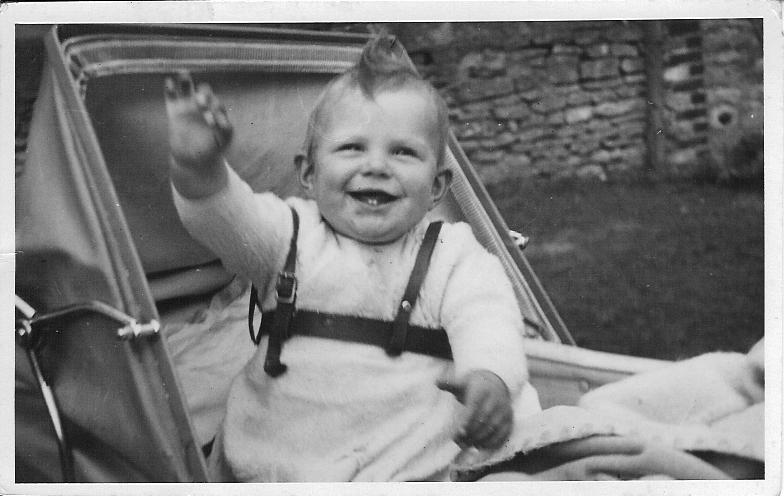
It could be anything about Horley Life,  or something you are involved that would be of interest.  How about a living memory history of Horley? Photo Album? Country life and farming? A history group like Hornton?  Or a guess the baby photo competition , yes that right  I still have them from a village fete years ago! Let us know, Di & Deb …………….


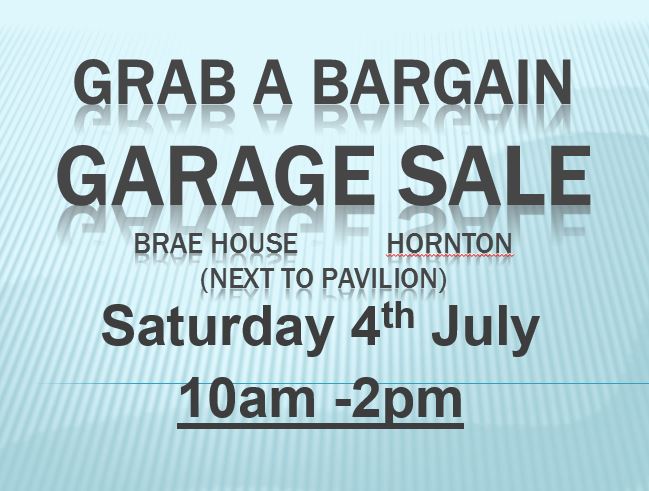
Garage Sale – This Saturday 4th July

garage sale

The Brae House Garage Sale is on this Saturday 4th July between 10am to 2pm-     Bell Street, Hornton, next to the Pavilion.

Most of it is just stuff we don’t use, wear, listen to or watch anymore.  Some of it is because we just  have less room in the new house. All of it though will be sold at bargain prices.

What’s on – 1st June

Our Summer Fete is on the Saturday after next (13th June) and the “ladies of guild” will be coming around the village to collect for donations. So go on have a cleansing sort out of your cupboards and places you store stuff for any raffle prizes, bottles and food for the tombola, plants,  and bric-a-brac.

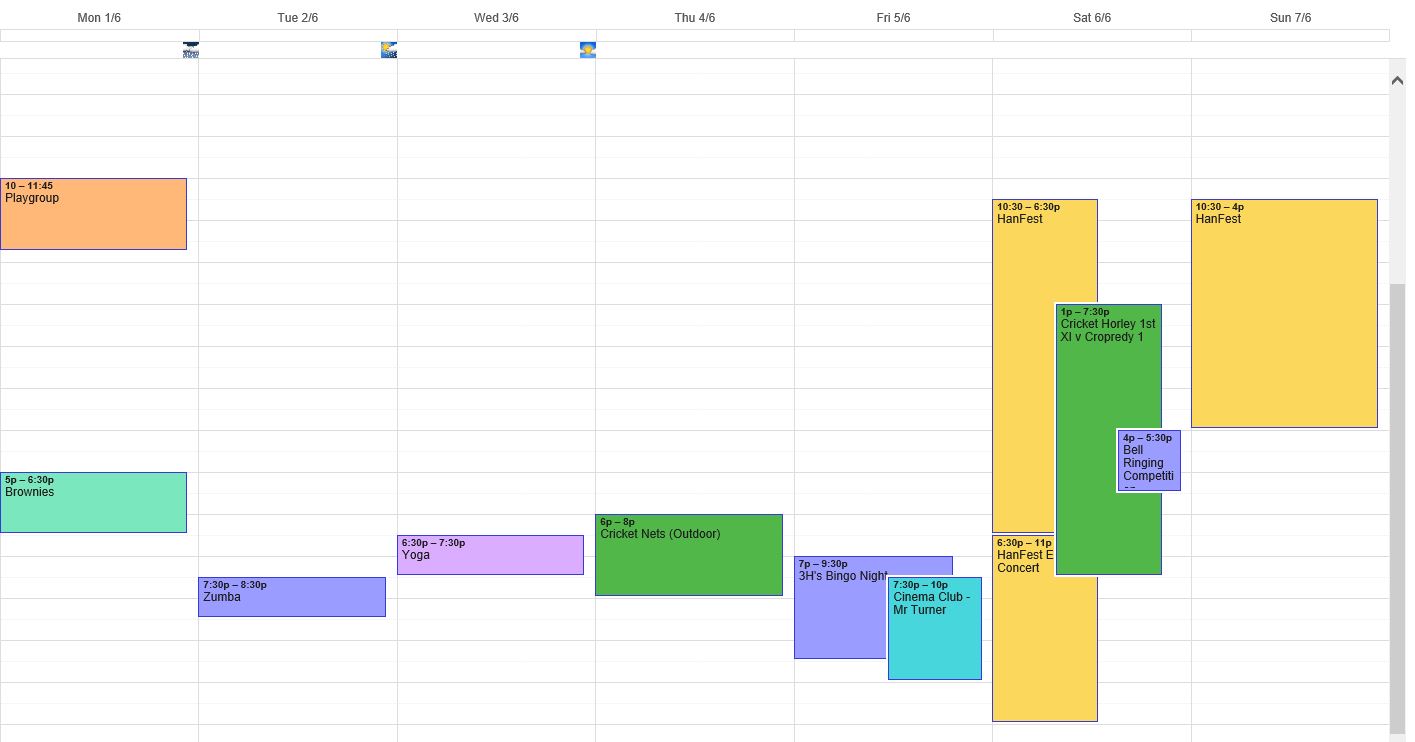
Meanwhile back to this coming week we have the following in our calendar : playgroup, brownies, zumba, (NO YOGA), cricket nets and match, cinema, bingo, bell ringing and at Hanfest a two day art exhibition and evening concert….. and all in our little corner of North Oxfordshire

wc 1.6.15