

Listen out on Saturday 11th June from 10:15 to 11:00 when the Edgehill Ringers will be ringing the Horley bells as part of the celebrations to mark the Queen’s 90th Birthday. Or better still, come along to watch and help us celebrate!
Listen out on Saturday 11th June from 10:15 to 11:00 when the Edgehill Ringers will be ringing the Horley bells as part of the celebrations to mark the Queen’s 90th Birthday. Or better still, come along to watch and help us celebrate!
TIME STANDS STILL (FOR NOW)
 Horley, has many times had the descriptive word ‘Timeless’ appended when describing the qualities of the village, and for many years now we have been ‘timeless’ in that the church clock has not been in a working state of repair, and hasn’t been heard since 2004, but now we are temporarily even more timeless, as the clock mechanism and one of the faces has been removed for restoration.

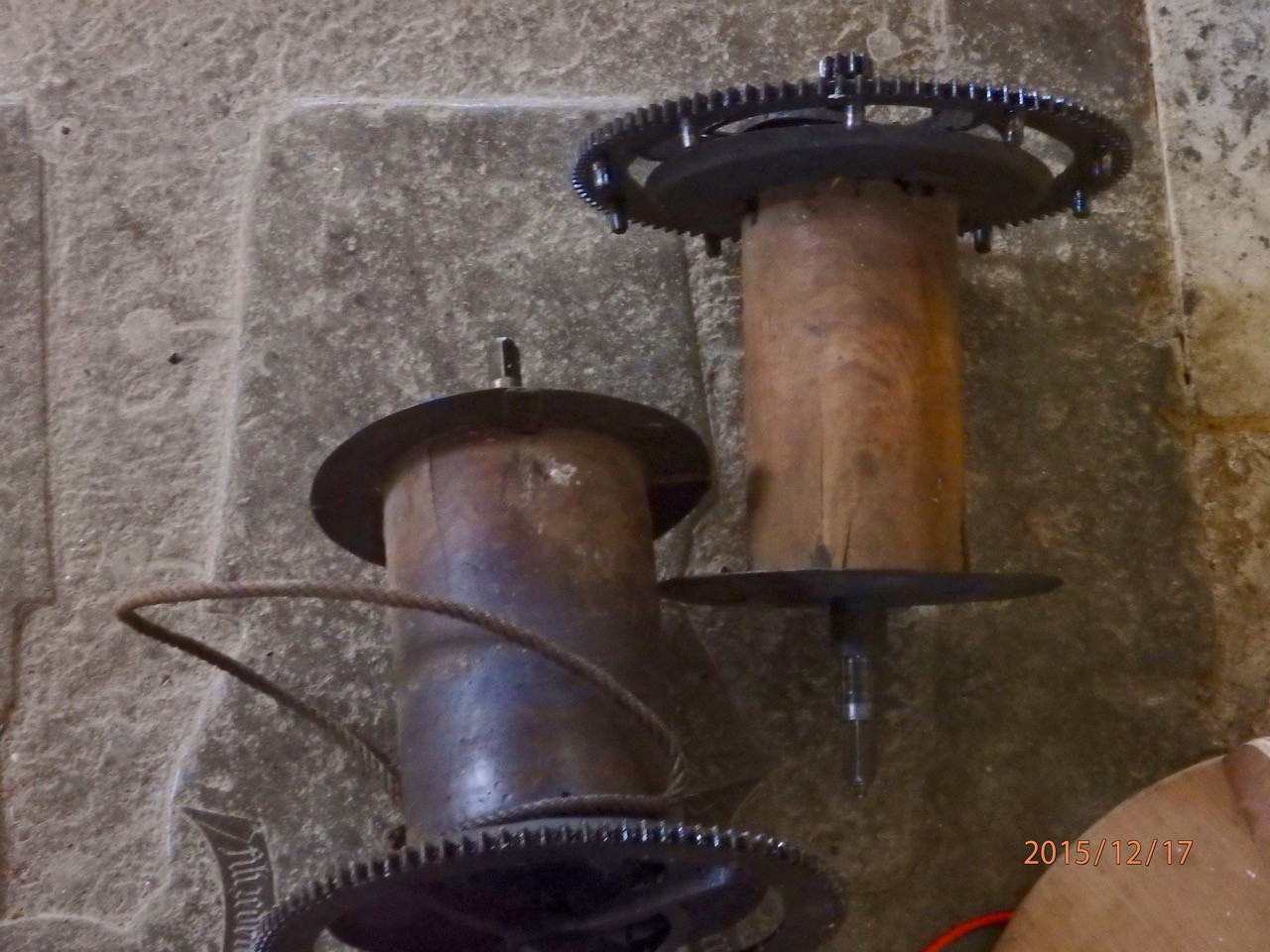
During the process of rehanging the bells in the tower, the linkage that connected the clock mechanism to the hammer that struck the tenor bell, and the two clock faces was removed to facilitate the removal of the bells. At the time it was hoped that it would be a relatively simple process of re-installing it afterwards but not so. It was found towards the final stages of rehanging the bells that a major beam was far more rotten than had been though to the extent that the whole beam would need to be replaced. Whilst this beam was attached to the bell frame it was not vital to the integral strength of it but was vital in supporting the mechanism of the clock. The new beam has been kindly donated by a village resident and can currently be seen near the bell ropes on the ground floor of the church. If you notice it, you will see that it is in two halves whereas the original one it replaced was in one piece having been installed when the church tower was built. Before the refurbished clock mechanism is returned later this year, this beam will be hoisted into place, drilled and secured to the tower wall and the bell-frame and the linkage re-attached.
Clock History – 1850 The Horley Curate, N J Pinwell wrote in the church register:
“In the summer of 1850 when examining the interior of the beautiful church at Cropredy, I discovered a supernumerary clock, which had been cast aside by that parish upon the purchase of a more modern one. It struck me that it would be a very useful and desirable thing for Horley. I then applied to J Loveday, Esq. of Wilmscote in Cropredy to endeavour to obtain it for me by purchase. This he did and I purchased it accordingly. I then mentioned it to my neighbour Mr Hitchcock and he then agreed to pay half the expense of the purchase and also to lend his cash for it. These promises he fulfilled. We then consulted together about the necessary repairs before mentioning the matter in vestry. I enquired at Banbury a few days after, of two watchmakers I found. The repairs would be (without additions) from 15 to 20 pounds. Thinking that the parish would object to the amount, I applied to a man of Hornton, a self instructed clock maker C.Webb. He had done repairs to the dials when at Cropredy and thought that one was absolutely necessary and the other to be viewed from the school as desirable. Webb’s estimate amounted to only five pounds and ten shillings besides the index to the interior (new) 30 shillings and a few trifles, altogether under eight pounds. I produced the estimate to the next vestry and after some conversation between Mr Hitchcock (Clergyman’s church warden) Mr Gardner (Parish Warden) and Mr Hall, tenant of Miss Stuarts farm and Mr Goodman who rented the vicarage who were the parties with the Curate comprising The Vestry. The entry of the estimate was entered in The Parish Book and I understood that I was to proceed. On the faith of this I did so and then mentioned other matters absolutely necessary, to W Hitchcock such as the dial stones, the making of the holes in the tower, putting up the dials (the drawings gilding and painting I did myself) he asked as to the top proprietary of these things and said he had to do as was proper and would be allowed, and so of the casing to keep the dust off and the addition at the top of the tower, it being too low so the weights, owing to the position of the tower (if this last had not been done) would have hung down to the pulpit. When all was complete we brought the matter before the vestry, they refused to pay anything. After much talk Mr Hall recorded Mr Hitchcock’s liberal offer of five pounds and an offer of one pound from Mr Gardner though others present would give nothing and so it was left for the church to pay the rest how it could. I wrote to Sir John Cope and he gave an order to his attorney for two guineas. Miss Stuart gave ten shillings and her mother who had no property here, one pound. I can hardly ask the vicar (Rev Sir John Seymour) as he has been at such enormous expense in repairing what others ought to have left in good order otherwise from his truly liberal spend. I know he would not leave his curate with more than a fair share of this burden, especially as it is an expense incurred for the general good. So much for Parish liberality and fairness!”
The clock was installed and functioned satisfactorily for near 100 years by a process of periodically, manually winding the weights back up every other day. After WW2, Air Commodore Iliffe Cozens (Manor House) modified the mechanism, by installing a series of electric motors and relays making the need for weights redundant, and to run off the mains electricity supply, with a back-up of a large 12v battery to account for power cuts. He also installed an ingenious system of switches to advance or retard the time on the clock without the need to climb up the tower.
This worked well for the next 50 years, being run and maintained by Iliffe and the one or two ‘apprentices’ he educated in the intricacies of the clock. The last of these was Tom Anthistle, but after his untimely death in 2004 there was no one versed in the workings of the clock so it fell silent.
Now, Church Warden Tim Allitt has overseen a project to restore the clock and as a result funds have largely been accumulated from sources such as the National Lottery and local donations, enabling the chosen contractors, Cumbria Clocks to remove the clock workings and the South-facing dial, refurbish them at their works in Cumbria and re fit them in a similar form as that below.

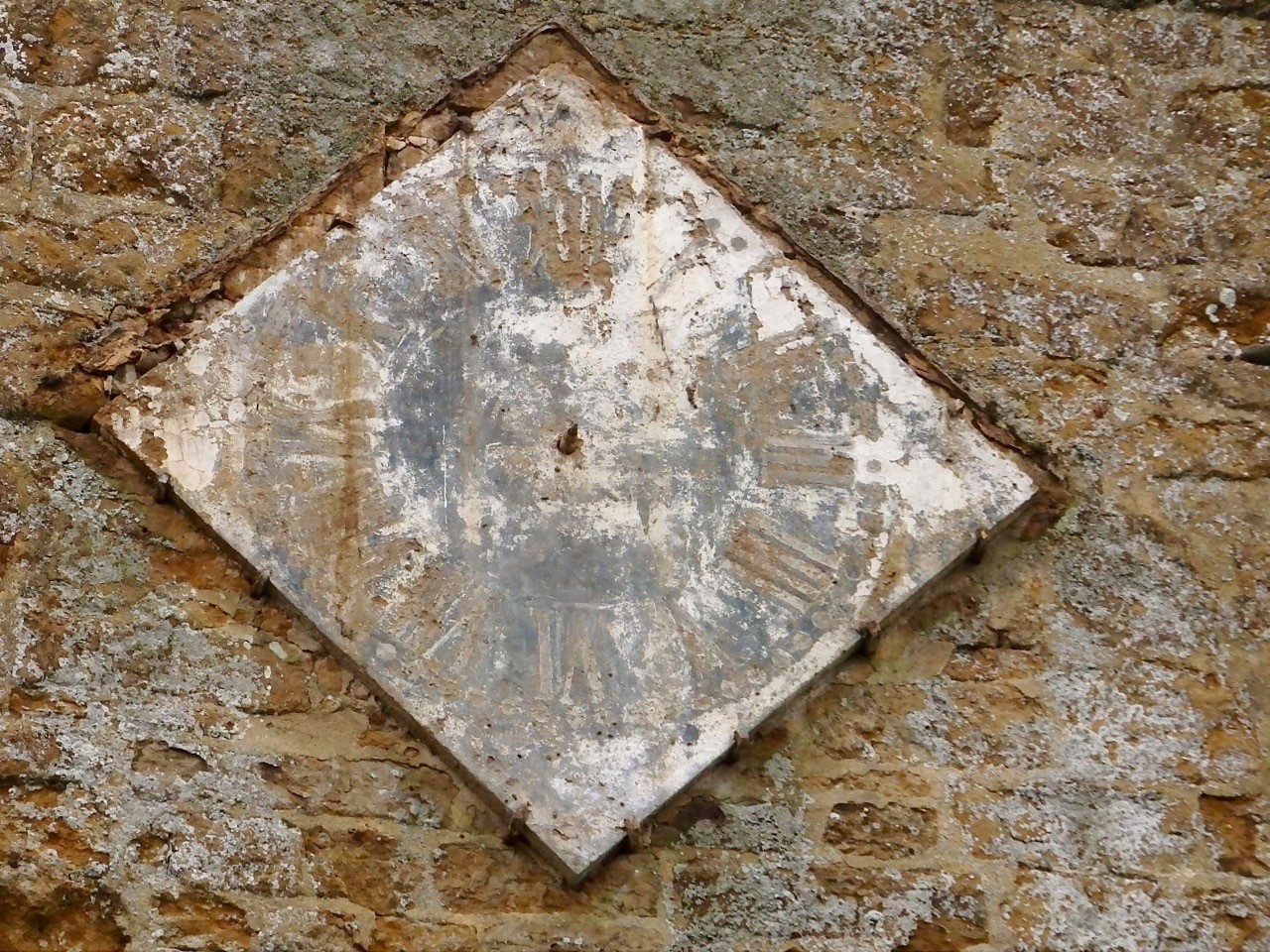
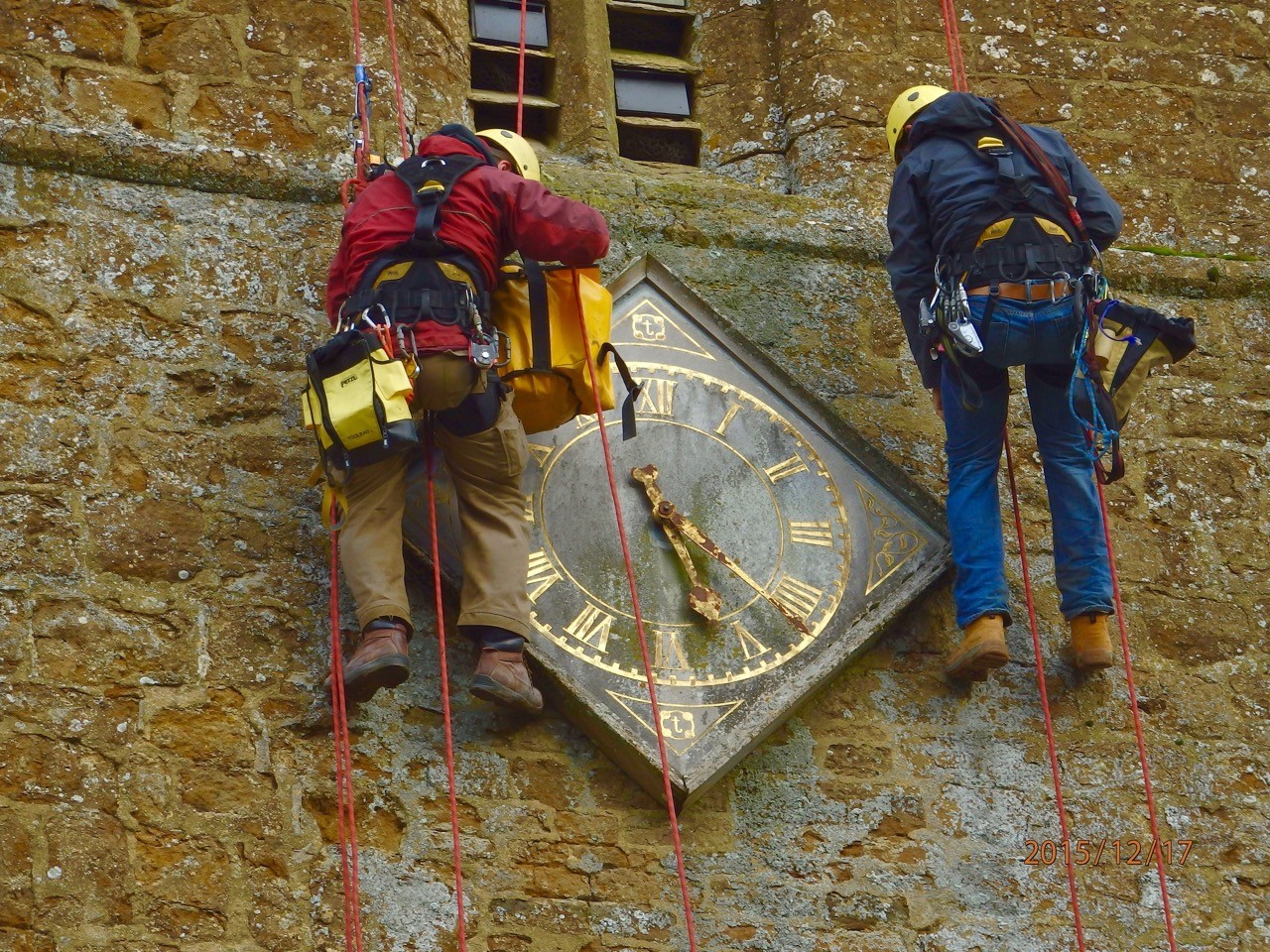
 The old mechanism was dismantled and lowered to the ground in manageable pieces, and the clock faces were dealt with by two abseilers suspended from the top of the tower, and lowering the pieces to the ground. When the clock face was removed the original face was behind it and can still be seen in place until the new face is refitted, it appears to be made of stone or slate but intriguingly doesn’t bear the mysterious J’s or t’s that appear on the dial being refurbished.
It is hoped that by late spring the clock and all its works will be back and functioning again as it has done for over two centuries.
Mike Patching
(First published in Horley Views Magazine March 2016 edition)
 Mike is to be awarded Oxfordshire’s High Sheriff Award in recognition of his significant and lasting contribution to community life in Horley and with schools in the local area.
The High Sheriff of Oxfordshire issues awards each year to people who have made a difference to their community over many years, and whose contribution has not been recognised in some other formal way.
The Parish Council put Mike’s name forward for this award for his valuable work over the years. Some of the many activities and projects includes:
The office of High Sheriff is a ceremonial role involving a mix of charitable and community functions. It is the oldest secular office in the country outside of the monarchy but without the extensive powers it used to have. It is unfunded, voluntary and non political. The current High Sheriff 2015/16 is Tom Birch Reynardson. There will be a formal award ceremony in Oxford on 29 February which Mike will attend.
Congratulations Mike, very well deserved and thank you for all your efforts over the years; it is very much appreciated. We hope you will share your pictures of the ceremony and what this award means to you and Sue.
by Honor (Morgan) Berry
The pattern of their life was indelibly laid down even before they were married, partly through Jim spending all his working life in the same job, and also because lack of money set strict limits on the choices available to them, in common with many other people. War or peace made little real difference.
Their day began very early and by 5.30am Lucy had made the morning’s first pot of tea. Jim collected the buckets of water from the tap before he went off to work, that is unless the weather was so cold that the tap had frozen. Fortunately that only happened in the worst weather, and if a hard frost was predicted the previous evening, then it was provident to fill the buckets then rather than wait for the morning, otherwise there would be no water for the early morning tea, no bottle of cold tea for lunch, and no water in which to wash faces or hands or do the breakfast dishes, let alone the week’s washing if it happened to be a Monday.
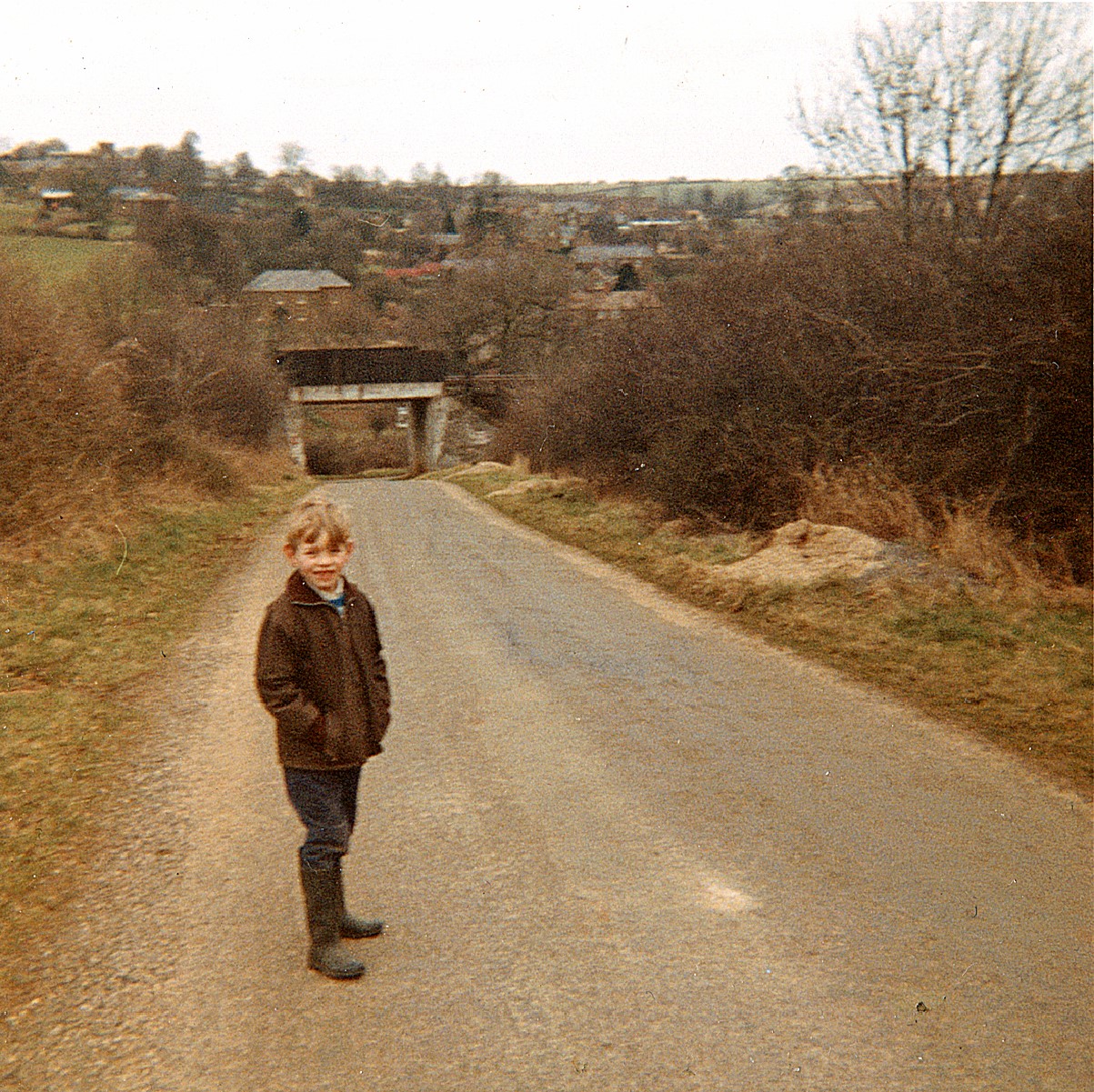 Jim went off on his bike down the village and stopped half way up the steep hill that rose up on the far side of the brook, where the Ironstone railway bridge crossed the road. As he and the other Ironstone workers arrived they hauled their bicycles up the steep embankment and onto the railway line to wait for the small tank-engine that pulled the van for them and their cycles the short distance to their work place.
Once Jim was away, Lucy’s day was her own until he returned at 3.30 for his dinner. The first thing she did was to cope with the daily chores. She started with the breakfast dishes and got ready for the Co-op milkman’s call. This sit-down-with-a-cup-of-tea visitation not only brought in the milk, but the news of the condition of the roads and the weather, and most important, details of what had happened locally in other villages overnight. It gave Lucy a head start in the exchange of news and in the circles of those who like her had an insatiable curiosity about local goings-on. Armed with her news she would barter with it later in the day.
 Lucy was lucky to have one of the four village taps outside her front garden gate. Others who lived further away had to carry their pails as far as 75 yards – and this alone must have provided motive for not washing clothes more often than necessary.
Since Lucy had no sink she washed up in an enamel bowl. The water had to be boiled in a kettle and then some soda added to make the hard Oxfordshire water a little softer, and to dissolve the fat more easily. She never rinsed the dishes, for that needed extra water, but simply dried them and put them away with an invisible veneer of chemical still on them. The water was kept for a while in case there should be a further use for it.
Next the fire had to be cleared out, the ashes riddled, and the fireplace laid with screwed up newspaper, sticks and finally coal ready for lighting later in the day. This job had to be done before the rest of the house was cleaned because it raised so much dust. Once completed the rest of the cleaning could proceed in earnest.
The floors in Lucy’s house were ancient very uneven flagged stone, but she covered all her floors with shiny linoleum that was easy to clean with a mop. She had rag rugs, made from bits and pieces of hard-wearing fabric (men’s trousers and overcoats) sewn or woven together by women in winter evenings, which were cheerful in front of the fire, and they were simply shaken out now and then in the garden to get rid of the accumulated dust. In the early 1950s Lucy took a great step forward by putting down a fitted carpet in her living room. It was not new, but bought second hand from Mrs Cherry, farmer’s wife in Hornton who was moving house. Jim laid it and it ‘fitted where it touched’, but it was considered very grand by all of us. Lucy had no vacuum cleaner or Ewbank so the carpet was brushed with a hard broom to clean it. The carpet added a feeling of warmth, even if it did go up and down over the lino covering the irregular undulating flagstones.
Lucy did not have a great deal of furniture, so there was not much polishing to do. She had an ornate ebonised glass-fronted sideboard in her sitting room given her by the Davieses at the Firs over the road, a Pembroke table, a pretty set of balloon-back chairs, and a wonderfully painted grandfather clock. These all had to be polished with wax polish, since there were then no spray cleaners. By way of decoration she had a few watercolours, a stuffed squirrel in a glass case, and a large print of the Stag at Bay. A duster flipped across these served well enough, and the only other items in the room were the two armchairs that she and Jim sat in by the fire every evening. She exchanged these from time to time, swapping one for a chair thrown out by one of the people she worked for, or buying one that somebody was selling for half a crown. Lucy re-covered them when they got worn or when she was able to buy a cheap remnant from one of the market stalls in Banbury. Her upholstery skills were rough and ready, and the material was pulled across the most important parts of the chair and sewn in place, leaving some of the chair showing the old material. These parts were covered up by turning that side of the chair to the wall or covering the gap with a cushion, but the chair looked clean and new.
There was little to do upstairs. Before she had a sprung mattress the feather one needed shaking up to get rid of the lumps, but apart from that she had only to empty the chamber pot. Chamber pots, (sometimes called Jerries) along with wasps and a former boyfriend, were things that Lucy could not abide. She was happy enough to have a pot under the bed to use in the depths of night rather than go downstairs and out into the garden to use the earth closet, but she did not like to empty them.
This routine was generally how Lucy coped with her housework, but the pattern varied according to the weather, the time of year, the day of the week or other activities which took over. Like most people, Lucy did her washing on Mondays. That is unless it was pouring with rain. Then it had to wait until the weather turned, but if it was fine the process began by placing a big pan of soapy water and clothes on the paraffin stove to boil. Since it was dark in the kitchen Lucy did her washing in the garden, in a large bowl on a stool. Because of the effort of boiling all the water, one lot was used for many clothes and rinsing was kept to a minimum. A drubbing board was used and the action of rubbing the clothes across its ridges made Lucy’s knuckles red and the clothes clean. When the clothes had been pummelled about for a while, they were rinsed and wrung out, first by hand, twisting them hard to get most of the water out, and then put through the rollers of a mangle to extract the last drops. Finally the sheets and clothes were hung out to dry, held in place by pegs sold by the gypsies – made of split thin branches of wood from which the bark had been cleaned. It was at this stage that disaster could happen as the damp sheets trailed on the earth, or shirts got blown off the line by a gust of wind. The clothes had to be watched for fear of rain. As soon as the skies looked dark there were worried trips to the window or back door and as soon as it started spotting with rain, the washing, only part dried, would be hastily unpegged and bundled indoors with much tut-tutting and wondering ‘When am I going to do it now? Dratted weather’. If she got all her washing done by the end of Monday, she was doing well, and the ironing was generally left until Tuesday.
Washing and ironing for Lucy were not nearly as difficult as it was for women who had children, though Lucy found it trying enough, particularly the ironing which was fiddly. Heating the heavy flat irons on the grate needed judgment: hot enough to vanquish the wrinkles, not so hot that they would burn the clothes. Then speed and skill were needed to do as much of the ironing as possible before the iron lost all its heat and became useless.
By the middle of the week, with a good deal of housework behind her, Lucy took time out. She visited her family once a week cycling miles through country lanes to Hook Norton until she ‘took ill’ in middle age and used the bus instead.
Once a week she also visited her mother-in-law in Hornton – as long as they were ‘talking’. Old Mrs Eadon was sharp-tongued and intolerant of Lucy’s foibles, and did not soften with age.
Market day in Banbury was on Thursdays and Lucy always caught the Stratford Blue bus at 8.45 to go and do her shopping. A trip into Banbury needed some organising for there were few buses, and any activities in Banbury had to be fitted into these times. The buses moved very slowly, but Lucy enjoyed the chat and the news from the other villages when she was on the bus, so it was worth the effort.
Since Lucy’s day started so early she had usually completed a great deal by lunchtime. At about half past one, when she had washed up the lunch dishes and had a cup of tea in whatever house she happened to be, Lucy’s thoughts turned towards Jim’s dinner that he had at half past three after work. Everyday Lucy prepared a generous meal for Jim: tender roasts or tasty casseroles finished off with a pudding, and each day he ate but a miniscule portion. Lucy on the other hand did herself proud whether or not she had already had a midday meal. She did not hold with people ‘going without’ – and neither did anybody else at that time. The shortages of money in the depression, and the rationing of food during the war had raised people’s anxieties about not having enough to eat. No one worried about eating too much and when supplies became available everybody was delighted. Lucy and many of her generation put on large quantities of weight. It became a norm, particularly for women in their forties and fifties, and was called the Middle Aged Spread. Nobody talked of its being unhealthy or unfashionable, it was just how things were and the women affected seemed very comfortable with their size.
The Evenings
Once Lucy had washed up after their main meal about 4pm her activities depended on the time of year. In summer Jim’s evenings were spent in the garden and Lucy might join him and potter about with the flowers. Jim was an excellent gardener and had long, neat rows of perfect vegetables. He grew sweet peas and chrysanthemums for Lucy to cut for the house during the summer and into the autumn. He also grew in addition to the normal green and root vegetables and legumes, shallots, Jerusalem artichokes and just a few black potatoes. If she felt like a stroll Lucy might visit the Astells to look at something Mary wanted to show her, or go and put some flowers on a grave in the churchyard, stopping on the way back to watch an evening cricket match, or even in later years, very daringly, have a drink in the pub if she had a friend with her.
Lucy did not normally go out in the winter evenings, not liking the dark. She enjoyed the cosiness of the winter evenings at home, particularly the long sit-down at the end of the day in the flickering dim light of the paraffin oil lamp. In the great open fireplace Lucy had hung up her collection of brass plates, horse brasses and kettles that caught the light of the fire and shone in bright contrast against the black beams where they were nailed. In front of the fire was a big bold steel fender with fire irons. But however cosy and traditional it looked, the fire gave out heat only immediately around it, so that unless you sat in Lucy’s or Jim’s chair on either side of the fire, you caught the draughts that swept down the chimney and eddied round the house. So, with the curtains drawn, and sitting by the fireside, she would write letters to the innumerable friends that she liked to keep in contact with, or read the women’s magazines which had been passed on to her. Once the BBC began to broadcast The Archers, she and Jim listened to it every day, and to the news that followed it on the wireless. Jim read his thrillers and histories, stuck stamps in his album and looked through the newspapers. If visitors called they stopped, and the caller was presented with a plate of cakes to eat, accompanied by a glass of South African sherry, or some homemade wine. Sometimes Jim enjoyed a game of cribbage or draughts in the winter evenings, but their days ended early and by nine o’clock Lucy was preparing Jim’s supper of pickled walnuts or onions to eat before he went to bed.
By nine thirty Lucy and Jim were in bed for the night. With the advent of electric lighting in about 1955, the process of retiring was made much easier than it had been with the candle which made shadows leap around the old bumpy walls, sloping ceilings and irregular beams.
Once in bed they slept, and there were not many nights when either one of them was still awake to hear the Church clock strike ten.
Lucy’s good works in the village
Although the pattern of her life was governed by housework, it was not Lucy’s first love. However often she repeated, ‘Oi loikes ter see it toidy’ she was relieved when it was done and was not above brushing the odd bit of dust under the carpet saying, ‘No-one wont notice that little bit’. As soon as things in the house were straight she would go out and ‘see to things’ in the village, which was her real passion in life. The lure of conversation and the promise of swapping news hastened her step.
Lucy had a heart that overflowed with kindness. If anyone needed a hand or wanted looking after she would be there offering help and food. She single-handedly looked after the needs of the oldest inhabitants of the village, doing their washing and shopping, undertaking their spring cleaning, collecting their pensions, and even decorating their rooms. Lucy also ordered their bottles of sherry or brandy from the wine merchants, for once they had a choice of the much lauded home-made wine or South African sherry they all opted for the latter whatever they said about the excellence of the former. The older women, Mrs Walden, pronounced Mrs Woaldin and Mrs Chapman were dependent upon Lucy’s unstinting generosity, time, and effort, and both were remarkably ungrateful for her kindness, chiding her for trivialities and calling her a ‘giddy thing’. They instinctively understood the extent of Lucy’s compliant nature. They promised to remember her in their wills but nothing ever came her way.
More rewarding was the work Lucy did with families who were much more appreciative of her willingness to save them from crises. Any slight qualms about her inquisitive questions were more than counterbalanced by her energetic goodwill. Before she worked with our family she had been cook at The Manor for the Stocktons, seen the Astells through their difficult and motherless years, helped the Blythes of The Firs in the 1940s when the four children were small, as well as lending a helping hand with the Rumps and even acting as midwife for an early birth. Lucy always became part of the families she was helping: she bustled around the house cleaning, scrubbing, dusting, hoovering, beating the mats ferociously on the washing line with the handle of the broom, washing and ironing. She did whatever there was to be done with never a second thought. She was unlike any other person in the village. It was a community which placed a very high value on privacy and was also very class bound, yet she was intimately involved in half a dozen homes from quite different classes and whether they were church or chapel made no difference. For some work she received wages, but often she did not. Lucy could never resist the urge to respond to a crisis or a cry for help, and she spent much of her time in this way.
Saturdays and Sundays
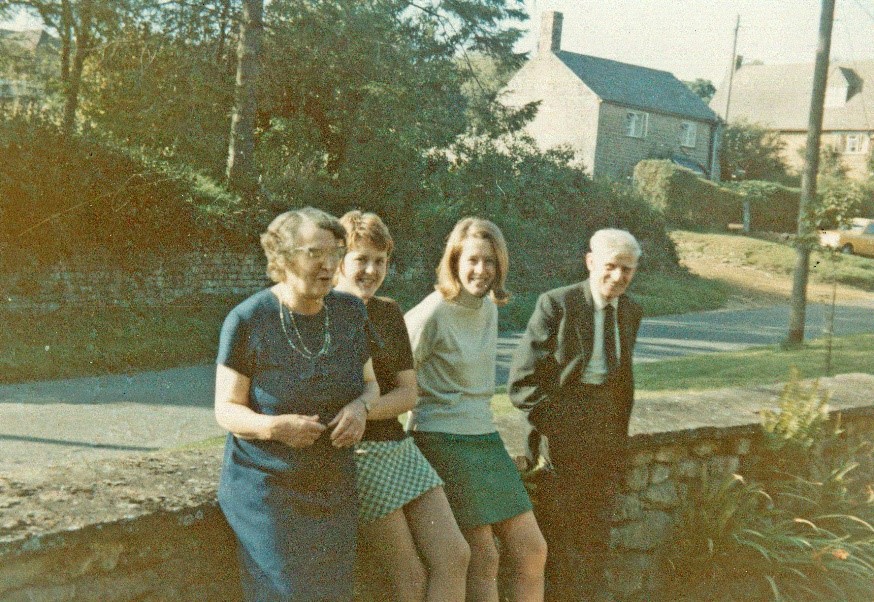 Saturdays and Sundays had routines all of their own. Saturdays meant shopping in Banbury in the morning and catching the half past twelve Sumner’s bus home. Afternoons were the time for village activities which anyone could join in such as fetes, jumble sales, decorating the church, doing the teas for cricket matches, and weddings. For Jim it meant the gardening, and doing the odd jobs that had accumulated during the week. Saturdays was the day when the earth closets were emptied. But this was only part of Jim’s Saturday activity, and he was usually found rummaging around his garden, straightening things up, or tying in the sweet peas that grew in profusion in his garden and gave off one of the most fragrant smells of summer. All activity ceased at 4.30. and by a quarter to five Jim was sitting alert in his armchair with a pencil poised to check the pools as the football and racing results were read over the wireless. Jim’s Saturdays were his own, but the same could not be said for Sundays.
On Sunday mornings Jim cycled to Hornton where he saw his parents for an hour or two and helped do the odd jobs that his mother had lined up for him during the week. After cycling back to Horley, he went for a drink in the pub with Harry Walden, who came to call for him, before coming home for his roast Sunday lunch. In the afternoon he read the papers while Lucy had a sleep, and after tea it was time for Lucy to get ready for Church.
There were two places of worship in Horley: the beautiful early English Anglican church at the top of the village on the hill, St Etheldreda’s, and the small, Victorian, Hornton stone Methodist chapel that was attached to the Eadon’s house.
Congregations in both church and chapel dwindled in the fifties, but there remained a core of loyal attenders. At St Etheldreda’s Charley Varney the verger, Lucy and her friend Mrs Tom Allington, the two churchwardens, the school teacher’s family, The Vicarage family and The Manor family. The religious convictions of the believers varied. At one extreme was Miss Gwladys Ball, a bluestocking aesthete, gaunt and gothic in her worship. At the other extreme was Lucy whose knees prevented her kneeling when praying and whose spiritual commitments did not prevent her sucking Mintoes during the sermons, unwrapping them noisily and glancing uneasily over her shoulder to see if anyone was looking.
 From time to time Lucy’s thoughts strayed wistfully towards the Methodist chapel next to her house. Her Sunday evenings would have been easier if she worshipped there. They sat down a lot and she would not have to climb the hill up the village. It was cosy in the chapel, unlike in the church which was cold and draughty despite the huge fire roaring in the massive and antique stove at the back of the church. They sang rousing hymns in chapel and as it was a small building it made a cheerful noise.
Going to church also meant having a good look at who was there, and if they were not, the opportunity to speculate where they were and why. All in all the discomforts were worth tolerating; and there was the added bonus of feeling righteous as she walked down the hill with Charley Varney and Mrs Tom Allington, sucking Mintoes together.
Lucy was a very regular attendee at church. Her only absence was one Sunday when Donald Peers, heart-throb of the early fifties was on the wireless. She stayed at home and was thrilled to hear him sing ‘There’s a little white duck swimming on the water’, but she felt the guilt and did not do it again.
After church on Sunday there was only time to sit down for a while to tell a disinterested Jim who was at church and what they were wearing. Then it was time once again to wind up the machinery for the next week.’
—————————————–
 Mrs Lucy Eadon’s role in the life of The Vicarage family was important in the 1960s, particularly to Honor who was young and said: ‘she kept our body and soul together – she had all the essential qualities for those times: she was cheerful, energetic, laughing and she counterbalanced the underlying sadness in our family.’
Frederick Jim Eadon 1903-1972 – Elsie Ethel Eadon 1907 -1975
 Oh Come ….. Oh Come …. along to Horley’s Christmas Carol Service, it holds promise of a truly festive experience to warm your soul, voice and spirit. It is being held as ever in our wonderful St. Etheldreda’s Church this Sunday 20th, dressing of the crib at 5:45pm, service starts at 6:00pm.
The service is designed to be fast paced and varied with bell ringing, youngsters playing music, singing and reading, a choir singing and leading the Carols accompanied by the organist.
At the end of the service you can enjoy some more festive spirit with a mince pie, a glass of something warm, and sing along round the piano to more seasonal songs with the choir.
by Honor (Morgan) Berry
Lucy’s life began to take on a new shape when she came to Horley and she knew an independence that had never been hers before. As cook at The Manor her role was clear, and when her work was done, her time was her own.
The Stockton’s who owned Horley Manor were a family of local solicitors. They had two children – Miss Marjory and Master John as Lucy always called them. They entertained a good deal in a modest way and Lucy’s job was to cook the three meals a day that they and the household staff required. She also prepared afternoon tea, and made a quantity of soft, easily digestible food for the aged and infirm of the village that she and the maid distributed twice a week. Since in The Manor household master and servants ate the same menu and drank the same wine life was straightforward for Lucy. The fare was rich and tasty with meat three times a day and a good deal of pastry, gravy, butter, eggs and cream. The cakes tended to be substantial and the vegetables well cooked and traditional. Fish was not much in evidence and neither were raw vegetables, skimmed milk, and the muesli that we value so highly today. Pastas, pizzas, burgers and Chinese food were unknown, and the only foreign cuisine that occasionally appeared was what was called a curry. It was in fact no more than a beef stew with a teaspoon of prepared curry powder added. But curry with its strange flavours and hot spices were not entirely unknown. One or two men in Horley had been to India and tasted the food for real when they had done their soldiering as young men. Charlie Varney was one of them, but I do not recall his praising the food.
Lucy’s days as cook may have been some of the happiest in her life. Lucy loved to feed people and there was constant activity, companionship and good humour. She took pride in the Stockton’s successes and took a nosey interest in their goings-on, so her work was always satisfying, and if it was possible, her spare time was even better.
Lucy walked out with a number of young men at this time. One boyfriend, much in favour, fell from grace because some days after he had taken her out to tea, he tapped at The Manor kitchen window and asked her for the money for it. She counted it out from her purse and then hurled it at him. They never exchanged a word again though they both spent the rest of their lives in Horley.
Lucy’s favourite pastimes were whist drives in the winter, and in the summer gentle walks across the fields to a pub, a little tennis, and best of all, dancing in the gloaming on long warm evenings. It was while she was at The Manor that she met Jim Eadon. He and his friend Bob Gilkes played tennis with Lucy and her friend Violet, the maid at The Manor.
Jim came from Hornton. His ‘Dad’, a fine looking man with a waxed moustache and gentle ways had once been a soldier and had fought in the Boer War. He still had his red jacket to prove it. Because of his dad’s soldiering, Jim had been born in Wellington Barracks, Chelsea, but the family had returned to Hornton where his parents kept The Red Lion pub [or The Dunn Cow?] for some time. Jim worked on the North Oxfordshire opencast ironstone mining works. He worked with his father, and they were known as ‘Big Jim’ and ‘Little Jim’ – the latter taking after his tiny sharp-witted mother. That he never completely broke away from her dominance is not surprising, for she was a tiny dragon of a woman that could have dominated an army.
Jim was every bit as quick-witted as his mother, but he had shyer and softer ways and was happier with Lucy. He found comfort in her stock phrases of ‘make yourself comfy’, ‘that little bit don’t matter’, ‘ʹave another’, ‘noice, hain’t it?’, and, as evening drew on ‘we’ll be ʹaving a drop [a drink] hin a minute’.
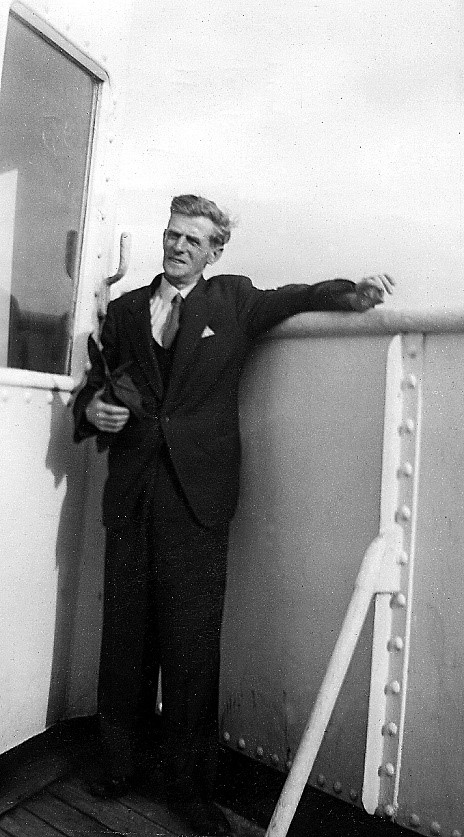
 After a respectable period of courtship and engagement Lucy and Jim got married in December 1933. Jim was 30 and Lucy 26 – rather older than most people on marriage in those days. After the ceremony at South Newington where Lucy’s family lived they returned to Horley to begin their life together. With her new status in life came changes: Jim would not let her cook at The Manor. He liked her to be at home in the evenings. Lucy left The Manor and moved down the lane. She and Jim lived in The Square and she went to work on a daily basis with the Astells who lived at Bramshill Park Farm. Jim and Lucy got on remarkably well. Lucy’s only slight disappointment was Jim did not eat much, but that did not stop her cooking too much for him.
When she had been cook at The Manor, she and Violet the maid had taken food to the poor and ill of the parish, and Lucy had seen the foul conditions that once active people had to live in if they were not able to look after themselves, and had no running water or sanitation. If they were weak they had to use any container as a lavatory, and they had no strength to empty it – harsh unpleasant details that are rarely recorded or spoken about. She and other women in the village were sensitive about the problems which the lack of drains created, and went to great lengths to keep their lavatories clean, using large quantities of strong- smelling disinfectants such as Dettol and Jeyes Fluid to disguise any unwanted smells.
The fact that he was part of a large well-connected family with a wide circle of acquaintances may account for the surprising fact that at some time the Rev. Harold Buxton had in his care at Horley Vicarage (he told us so – though it seems more likely to have been Essex Cottage) the young child Valentine Dyall, with his father Franklin.
Valentine Dyall was to become a well known actor with a famous sepulchral voice. He cornered the market in ghoulish parts intended to create dread and is best known for his narration of the radio horror series Appointment with Fear. He was the English equivalent of the American Vincent Price. Bishop Buxton told us that he bathed Valentine every day in our bathroom. It was hard to imagine a miniature version of the frightening Valentine Dyall slipping around in our old- fashioned bath. Valentine Dyall went on to give his son not only the name Christian, but also the name Jocelyn, which may have been a reference to Harold Jocelyn Buxton.
 In 2010 the BBC produced an audio CD of the only surviving episodes of Appointment with Fear in the BBC archives: ‘four gripping episodes from the famous 1940s BBC horror series’. They were hugely popular and ran for ten series. Apart from his connection with Horley, and the thrill of the extraordinary rich deep voice of Valentine Dyall, they are wonderful examples of radio drama in the war torn years of the 1940s, and the post-war period.
Bill Griffin (grandson of the Bagnalls of Horley Manor) gave me a copy of Harold Buxton’s four pages of autobiographical notes about coming to Horley. Harold Buxton says:
‘I arrived in Horley with quite a little party. Two special friends, who were glad to be out of London because of the risks [this was during WW1], volunteered to come as ‘paying guests’ to my temporary residence in Essex Cottage. The Vicarage was then occupied by Belgian refugees.
First there was Franklin Dyall, who was a noted person on the stage, mainly in Shakespeare. He was a widower with a small boy of three or four years, Valentine or ‘Val’ Dyall (who himself became an actor and broadcaster in later life). Franklin Dyall was in London during the week but the other friend, Charles Dalmon, the poet, had lived with the Dyalls and was virtually ‘nurse’ to the small boy. Happily Franklin Dyall was with us at the weekends, and always read the lesson at Evensong. His wonderful voice and dramatic reading brought many extra visitors to hear him. Charles Dalmon was known as a modern ‘Herrick’ and came originally from Sussex, the land of poets. He regarded England as the real ‘Arcady’ and I made him poet-laureate of Horley!’
Somebody else also had the laureate idea, and the Horsham Museum and Art Gallery have published a short book, Charles Dalmon, the poet laureate of Sussex by George Cockman. I think Harold Buxton was a romantic. Dalmon was a poet, though not well known and most poems I have found online were written around 1904 (published in The Harper’s Monthly) and discreetly erotic. He was likely gay, and although that is not stated he was a friend of Noel Coward and is reputed to have said ‘my ambition is to be crushed to death between the thighs of a guardsman’! It would be interesting to know if Charles Dalmon wrote any poems when he was in Horley.
 Although Franklin Dyall was a well-known character actor having 26 films to his credit and many more plays – he was not a Shakespearean actor – I cannot find any Shakespearean play he was in; and he was not widowed as Harold Buxton says – his wife Phyllis Logan had left him. There are some exquisite photographs of her by her future second husband Cavendish Moreton dated 1909 held at the National Portrait Gallery, and which can be viewed on line. They had male twins in 1911. The nice thing for the Horley Church congregation was that they had the pleasure of hearing the pure tones of the man who quite often read the news on the radio, reading the lesson in church.
Harold Buxton’s curacy in Thaxted was at an interesting time. It cannot be co-incidental that his cousin Conrad Roden Noel became Vicar there in 1910, and Harold Buxton became his curate almost immediately. Conrad Noel was known as the ‘Red Vicar’ and was a Christian Socialist. He created a storm of protest by raising the Red Flag and the Sinn Fein flag alongside the flag of St George on the church. Cambridge students attacked the church in what was called the ‘Battle of the Flags’. The matter was only resolved when the Consistory Court forbade the hanging of both the Red Flag and the Sinn Fein flag. Conrad Noel also gathered around him figures from the world of arts: his father was a poet, the composer Gustav Holst was a friend and parishioner, and I believe there were others.
I have wondered whether by sharing his home with the Dyalls and Dalmon, Harold Buxton was hoping to emulate his cousin, or whether the general culture of his family included supporting the liberal arts and artists.
Horley church has a charming watercolour painting by a difficult-to-trace artist Frank W Carter. I believe he was another friend in Harold Buxton’s artistic circle. Weight is lent to this idea because Frank Carter painted a striking portrait of The Red Vicar which now hangs in Thaxted Guildhall. There is also a painting of the interior of Thaxted church on the cover of Conrad Noel’s biography – which has striking similarities to the Horley water colour.
Extract from A Vanished Past Volume 1 £15 Both Volumes and p&p £33. From Clare Marchant, Shaftesbury House, 15 Circus Street, Greenwich, London SE10 8SN or marchantclare@hotmail. Cheques payable to Clare Marchant.
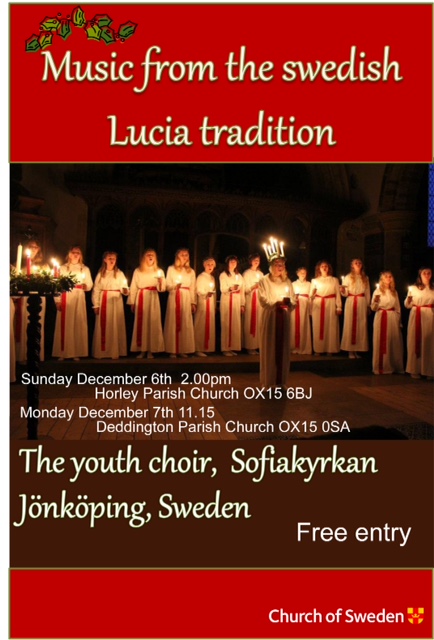 Music from the swedish Lucia tradition from The Youth Choir, Sofiakyrkan, Jönköping, Sweden
Christ Church Cathedral, Oxford Saturday, 5th 3.30pm
Horley Parish Church, Sunday, 6th 2.00 pm
Shenington Primary School Monday, 7th 9.15 pm
Deddington Parish Church Monday, 7th 11.15 am
Free entry to all these occasions
 St. Etheldreda’s would like to invite you to her Christmas Carol Service. It will be a very special evening, welcoming people of all ages and reminding us of how very lucky we are.
The Service will start at 6:00pm, after the children of Horley have Dressed the Crib at 5:45pm .
We will be singing carols accompanied by the church organ, and watching the children and young people of Horley perform readings, poetry and traditional songs.
 TheHorleyViews.com