A Vanished Past – Vol.1 – A Time of Change ( 3 of 3)
Decline and Regeneration
The decline of the village – In 1951 there were about seventy houses and 213 people in Horley. Once the village had been far more populous: it had about twice the population a hundred years earlier[2]. But since the mid 19th century village people had begun to drift away from farm labouring to better paid jobs in Banbury, or metropolitan areas, some emigrated, and the population decreased.
As families left the village there were fewer people to live in their vacated homes, and once they were left unoccupied the fabric of the building and thatch deteriorated until eventually, with the help of a few hard frosts, windowless and doorless, the buildings tumbled into untidy heaps.
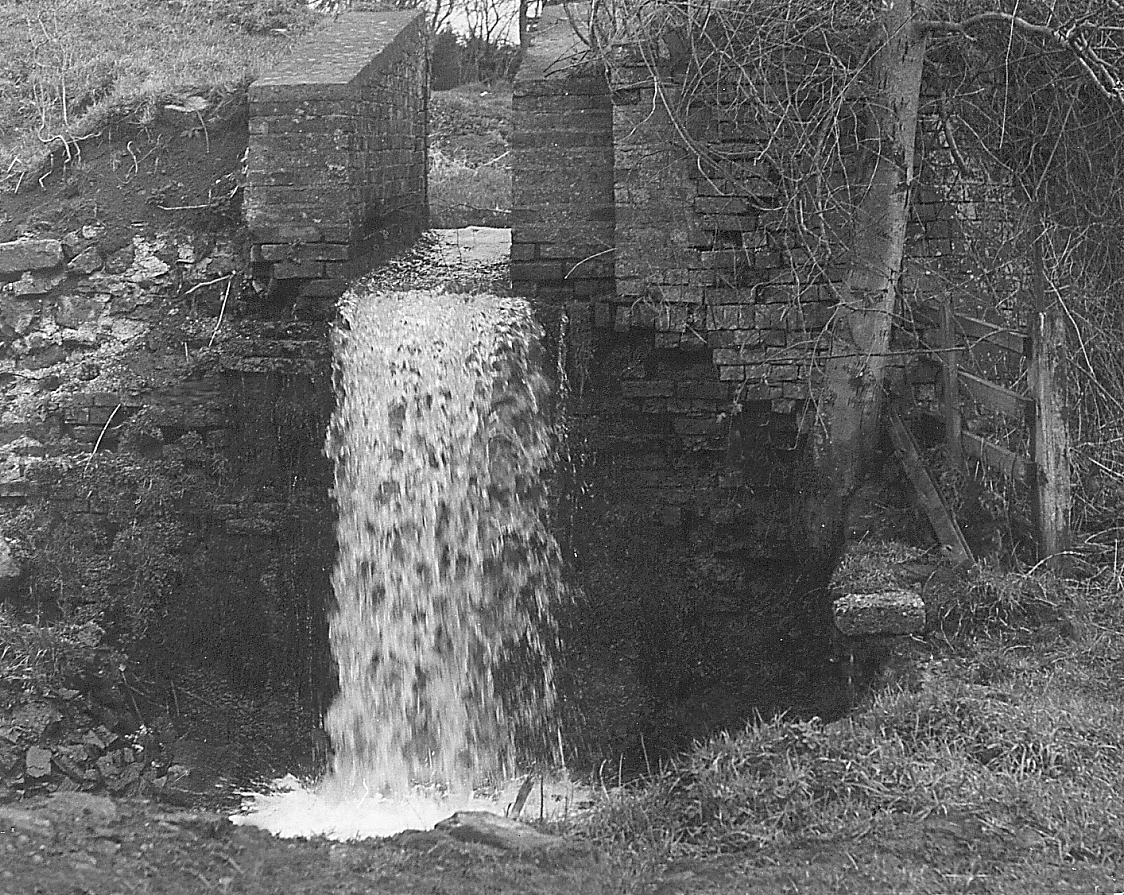
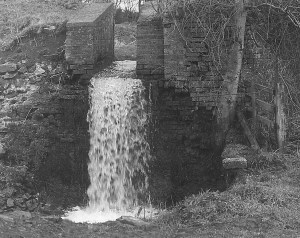 At the bottom of the village where the course of the Sor Brook had been altered to create a millrace, stood the ruins of the old mill. It had been constructed in the last century and had become no more than a precarious pile of Hornton stone, its windows barricaded with rusting corrugated iron that now flapped in the wind. We sometimes played dangerous games, leaping the terrifying race before it plummeted down its waterfall.
A few yards further up the street Phlox Cottage was tumbling down. This is where Old Mrs West lived until she died just after the war.
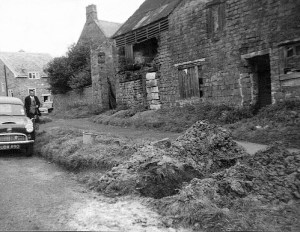 A little further up the road, just north of Enfield Cottage were other stone buildings that had neither roofs nor upper floors. The people who had lived there had long since been forgotten and they were now the ghostly homes of people only identified by headstones in the churchyard.
A cluster of buildings in The Square had become run down and empty. These had been bought up by ‘Dooky’ Jelfs. The walls of the old houses bulged unsafely and rotting planks criss-crossed the gaping windows in an attempt to prevent curious children playing inside.
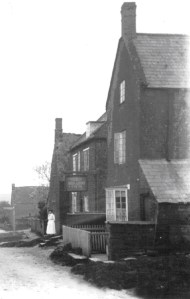 Other houses in The Square were fast disappearing: next to The Red Lion pub a cottage facing the road was knocked down to make way for a new car park for the pub. Behind it a whole row had gone, including the village bake house, where once the village people had taken their Sunday joint to be cooked, if they had one.
At the top end of the village behind Orchard Cottage a wheelwright’s workshop and cottages had been abandoned and left to fall down since there was no reason for anyone to buy them when their owners moved to Banbury. Derelict properties, overgrown with elderberry trees and other shrubs littered our village. Indeed the old were not far wrong when they said Horley was not half the village that it had been.
The Impact of the two World Wars – It was more than the changes in farming which changed our village life – the wars affected almost every aspect of our community. The loss of young Horley men in WWI maimed families and the community, and the experience of the trenches and fighting left many of the survivors scarred for life.
WWII came only 23 years later, and war-weary fathers saw their sons and young neighbours called up for duty in one or other of the armed services, and leave the village.
The Evacuees and other Strangers –The war years saw influxes of strangers. I doubt the country, including Horley, had experienced such a mass movement of people. There were several waves of London evacuees that needed accommodating. Local airfields at Shenington and Gaydon brought new blood in the form of RAF personnel. Later, American airmen appeared in Banbury from a large American base in Upper Heyford. And from 1941 Horley experienced another wave of new people when Horley House was requisitioned to accommodate Prisoners-of-War (POWs). The Italians were the first to arrive followed by the Germans. Finally came the Displaced Persons, all lone men, from Lithuania, Latvia and Estonia, I believe.
Agricultural mechanisation – In our time fewer and fewer men chose, or were needed, to work on the land. There had been pointers for many years before the outbreak of war that farming was in decline. The introduction of new methods and more sophisticated machinery continued the pattern already developing, and farms became less labour intensive.
Conditions and pay were better in industry and the importance of the multi-skilled farm labourer diminished as mechanisation took over on the farm. And so the rural culture died. The harvests although important were no longer the only topic of conversation of the summer months, and the Harvest Home (or Harvest Festival), though still an occasion, was no longer a celebration of a good harvest that was critical to the well-being and health of the whole community in the following months.
Traditional ways of life were vulnerable to these changes. It was not just the effects of war that challenged the traditions. With the importance of the Aluminium Works in Banbury, and the Ironstone workings in Wroxton, the next village, there was a choice of employment, improved wages and an opportunity for advancement.
With greater control of their employment and changes in the distribution of wealth, the days of the village hierarchy and power structure were almost ended.
Thatched roofs – It was during the post-war period and 1950s that roofs which had previously been thatched were tiled. The village lost a lot of its soft curved appearance for a more angular but tidier look.
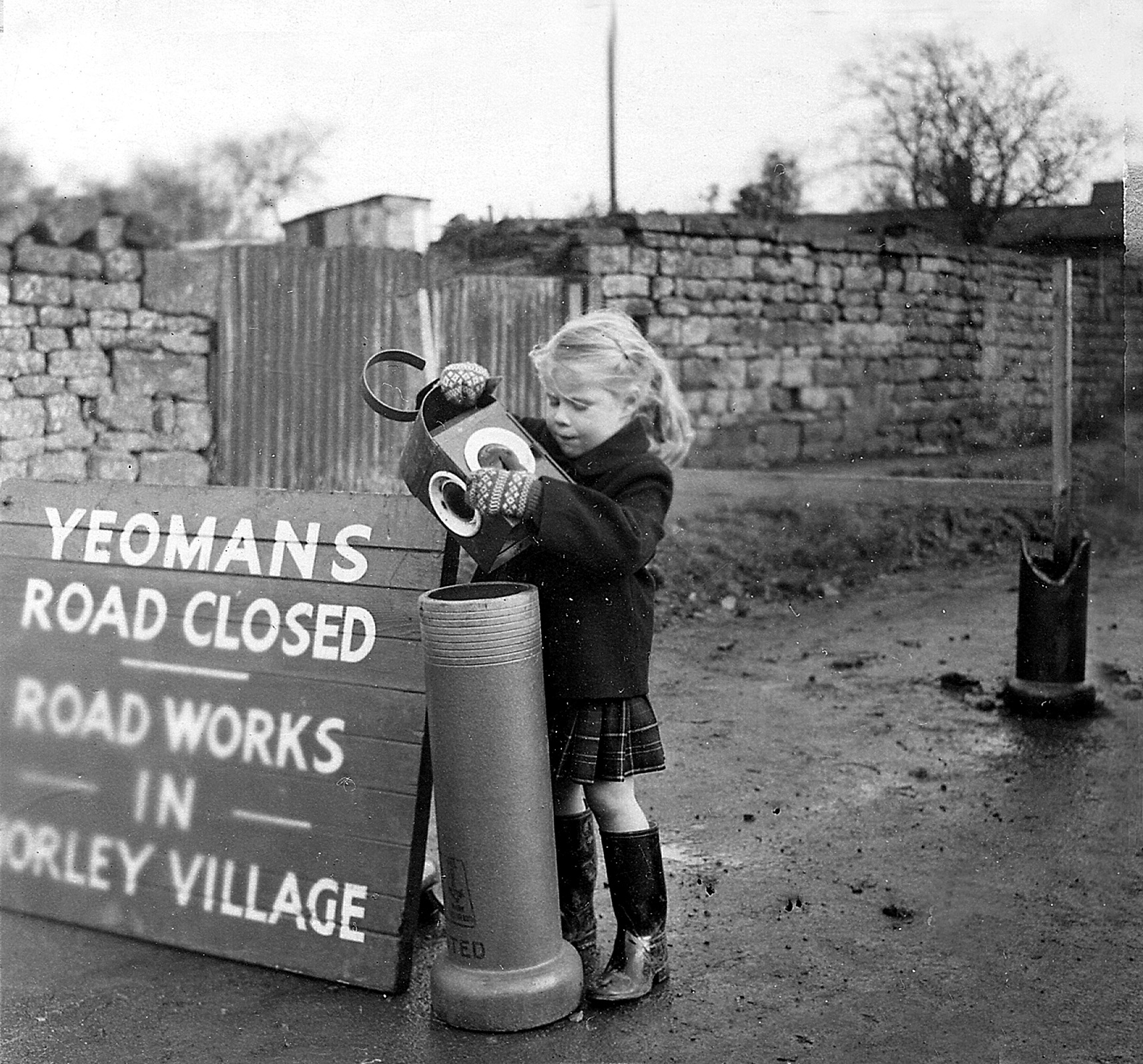
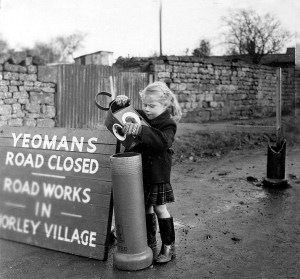 The Arrival of Electricity, Water and The Main Drain – Electricity came to the village. Amidst heated controversy five street lights were installed. Then the Church, the School and the Chapel put lights on their buildings. In a very short space of time we had become a 10-light safety-conscious village. But the most significant change that dramatically affected everybody’s life was the coming of mains water and mains sewerage. The process was drawn out and the village reduced to chaos for long periods. The work continued for so long that people began to talk of a Golden Age when Horley had been a beautiful place to behold, but in truth, however untidy the earthworks were, Horley had never been a chocolate-box village.
When the project was complete and pipes connected the work in the home for both men and women was greatly reduced and life became easier and pleasanter. Within a short time the village cottages became desirable residences. The risks to health had been significantly reduced. But with the benefits of these state funded services came dilemmas. Cllr George Pratt and his colleagues on the Rural District Council were faced with ethical issues about the proper level of state intervention when they considered the proposal to put fluoride in the water to improve the health of teeth, whether people wanted it or not.
A Better Britain – Regenerating Horley
As the course of the war began to reach its conclusion there was growing recognition that after the disruption and hardship of war people both wanted and deserved better. It was felt that those returning from war had earned their place in a ‘Better Britain’. The Beveridge Report called for national welfare systems that would protect us all ‘from the cradle to the grave’, and the Labour Government of 1945 brought it about.
Inevitably the scene was set for changes, and from those returning from the war certain individuals came forward to take a lead. George Pratt was, in the post war years responsible for promoting many of the practical developments that took place in Horley. Having in the early years of the war organised the Home Guard in the area, he had spent the latter years of the war serving as an Army Officer abroad. It gave him opportunities to see a bit of the world, and a great deal of life away from the confines of his previous experience, as well as being able to reflect on the future possibilities that life in Horley held. He valued community life, and his commitment to serve his fellow parishioners was heightened by his experiences of war. On his return he found others returning from war were of like mind – those that had left as boys returned as men with new perspectives on life and they were keen to make the most of the peace.
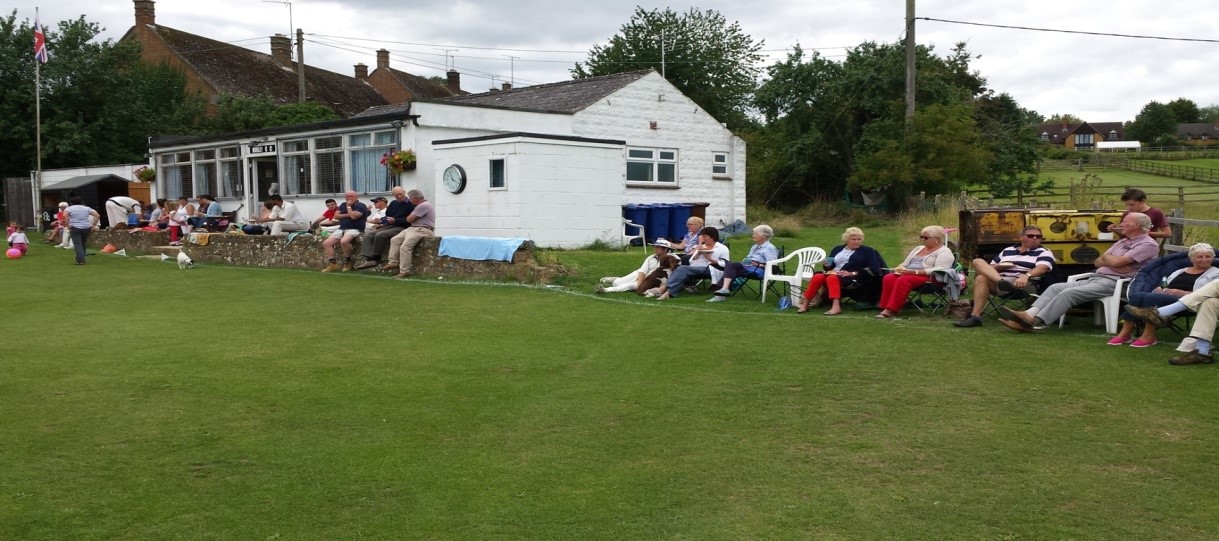
In the years immediately after the war our community – dying though its traditions were – had a brief reprieve. Village life underwent a period of energetic regeneration as the moves to get Britain back on its feet were felt everywhere. One of the first institutions to establish itself was the Horley Cricket Club. It proclaimed its establishment by acquiring its own cricket-field. Glyn Morgan the Vicar had realised that a cricket team and/or a football team could be a unifying, purposeful and enjoyable activity for the community especially for young men. George Pratt, a natural leader, rallied a cricket team, and before long the Club built its own pavilion. Our father, Glyn Morgan laid the pavilion’s foundation stone on a wet Coronation Day in the summer of 1953.
Apart from the Cricket Club there was still a Pig Club, a thriving Youth Club run by a series of people including George Green of Midhill, and a Mothers’ Union that met on the first Tuesday in each month in The Vicarage sitting room with an interesting speaker. The Church Choir, run by Matt Blythe, had choir practice early on Friday evenings. A strong contingent of men belonged to the British Legion, which met outside the village, and there was a Girls’ Club. In addition to this there were the meetings of the Parochial Church Council (the PCC), the Parish Council and the School Managers.
Secondary Education – t was a period of advance. From January 1948 for the first time Horley’s young people over 11 received their education outside the village. It must have been a wise and timely development and expanded the educational curriculum, but it also weakened the village socially and there was less commitment to village activities and relationships, as young people widened their friendship networks, and increasingly spent their leisure time outside the village.
Abandoned Untidiness to Village pride
The piles of stones from its derelict houses gave Horley an air of abandoned untidiness. It was still a working village so there were always reminders of the herds of cow that passed through the village several times a day, as well as clods of earth or straw that had fallen from carts and tractors. During the winter the village was a great deal tidier than in the summer when the grass grew high along the verges of the roads into the village and down the sides of the main street. The Council made some provision for the grass to be cut by roadman Charley Varney, but he liked to collect it once it was ripe for hay that he could use in the winter, so he had a vested interest in waiting until it was ready. Our village had a certain overgrown charm during these summer months.
Flowering cherries were planted from The Square down to Phlox Cottage. This was part of the 1953 Coronation celebrations and was very new for Horley. It proved very difficult to stop the boys swinging on the saplings and accidentally breaking them – they did not seem to belong to anyone in particular, and were counted fair game. But after a few years the trees became established and eventually flowered. People were surprised and pleased with them and the first step had been taken to open our eyes to the way we wanted our village to look.
Vestiges of a Feudal Society
There was a clear class divide: the war softened its manifestations to some extent, but it was evident, and it depended on where you were in the hierarchy whether you minded or not. Robert Pearson writes:
‘The covertly oppressive nature of the hierarchical nature of society peculiar to Britain was, of course, fissured to some extent by the First World War (1914-1918) and shattered by the Second World War (1939-1945).’
The nature of village hierarchies meant that most formal leadership roles had long been the responsibility, possibly privilege, of the middle classes (squire, Vicar, any landowner, large farmers and sometimes teachers) – people with some money or influence. A good deal of village problem-solving and philanthropy was expected of them, and mostly they responded. It is easy to see how very dependent most communities had been on the prosperity of these better-off families to generate work and maintain law and order. Working families hitting hard times relied on their charity in the absence of any welfare state. Any lack of commitment, or absence, or failure to act benevolently could make life difficult for the village. Although jealously guarded, these roles were not always diligently filled and that lead to grumbling by discontented people.
When things went wrong people complained until the Vicar, or someone the equivalent of the squire did something to correct the situation. Even after all they had given during the wars, older village people still did not feel a sense of power or equality and continued to behave as if the squire, who no longer existed, should run village affairs. Some referred to their ‘betters’ and a few nervously said ‘I know my place’. However as the village squirearchy vanished and was superseded by the Rural District Council, the phrase “You’d think Mr Stockton/the Vicar would do something about it” was replaced by “Why don’t the Council do anything about it?”
There were several factors which may have contributed to subsequent change such as ready access to their elected Councillor, improved complaints systems, and most importantly, the increasing availability of home telephones enabling some people to take matters into their own hands.
The New Council Houses. In the early nineteen fifties the Rural District Council planned to build some new houses in Horley. It was part of the National Housing Programme to improve living conditions, and all over the country new council housing estates were springing up. The new houses were to have both bathrooms and modern kitchens, and most important of all they were not accommodation tied to a job as were many of the homes in the village. The new council houses were built just off the Big Lane, below Park Farm, in what was to become Lane Close.
Before the new council houses were built, Lane Close was a small narrow meadow that we had to cross to reach the cricket field. The announcement that twelve new homes were to be built there – ten semi-detached houses and two bungalows came as an exciting surprise because it meant a great deal of brand new accommodation for some lucky people. There was speculation as to who would eventually live there, and who deserved to. We all examined the houses as they went up. My mother feared they looked very small inside, and there appeared to be no front doors, but it was very difficult to imagine amid the wet mud what they would eventually look like. When the day came and the allocation of houses was announced one of the new homes went to Maurice, and later another to Dennis Jelfs, Fred Jelfs’ sons, who both had young families. They left tiny terraced cottages in Varney’s Yard (now Ivy Cottage).
The Greens with four children Reggie, Doreen, Lawrence and Carol who had always lived in the village moved from their cramped little cottage (the further of the two cottages which became Midhill). They and other families moved home by carrying all their furniture and goods bit by bit from one home to the other. The children took a major part in the move and trundled handcarts up and down the village lane between the two houses. The mixture of excitement and physical exhaustion took their toll by the end of the day. One teenager burst into tears when a pot of jam slipped from her grasp and broke. Her tears mixed with the rain in The Square by the telephone kiosk. My mother, Elma Morgan, coming out of the Post Office found it impossible to console her: the weather was awful, it was late in the day, everyone was tired and the precious pot of jam was what she had bought as a treat for tea.
The Hicks family was given a house too and they were able to move from the damp deteriorating Jasmine Cottage into the real comfort of a brand new home. When our father, Glyn Morgan the Vicar, visited them to see how they were settling in, a joyful George Hicks flung open the front door, extended his arms as though to embrace him and welcomed him in with a dramatic flourish. With great pride George bade him “Come into the drawing room, Vicar”.
The rest of Lane Close also seemed pleased with their front rooms, but it was not long before the gilt on the gingerbread began to wear thin. Not all the houses had gone to Horley people. The Wrights at Number 1 Lane Close were Londoners by origin but had not returned after the war and had some difficult experiences in the early days in Horley. Their neighbours the Hemmings were a Hornton family and would have much preferred to stay there. The people with only two bedrooms would rather have had more, the doors stuck in the wet weather, and nobody much liked the Rayburn stoves that had been installed in the living room by an unimaginative/over-imaginative architect on the grounds that country people had been used to kitchen ranges and would therefore welcome a similar sort of heating and means of cooking. Nonetheless the gardens soon began to bloom, and with exceptions were all kept in glorious order.
The children from the new families swelled the numbers attending Horley School, and combined with the post-war baby boom known as ‘the bulge’ ensured the survival of the school for another generation.
The rest of this volume and part of volume two are about the families who experienced the changes in our village during this period.
[2] 392 residents in 1851 and 425 residents in 1841
Clare Marchant, June 2015
 The is an extract from A Vanished Past Volume 1, each Volume is £15 +P&P or you can buy both for £33 incl. p&p.
They are available directly from Clare , Shaftesbury House, 15 Circus Street, Greenwich, London SE10 8SN or marchantclare@hotmail or call on 020 8858 8529. Cheques payable to Clare Marchant.
Clare Marchant was born in Horley Vicarage, Oxfordshire in 1941 and spent her formative years there until 1965. She now lives in Greenwich, London
First published in 2015. All rights reserved. The rights of Clare Marchant to be identified as author of this work has been asserted in accordance with the Copyright, Design and Patents Act 1988. No part of this publication may be reproduced without the consent of © Clare Marchant. Copyright for each image rests with the contributor.
 Meet & Greet including Registration Evening:











 TheHorleyViews.com
